
Managing search engine optimization (SEO) across dozens or hundreds of storefronts requires a distinct playbook compared to single-location SEO. Dealing with multiple branches at scale introduces several risks, including duplicate content, inconsistent citations, fragmented authority, and conflicting business information.
- What is Multi-Location Local SEO?
- The Essential Multi-Location SEO Strategy Guide
- 1. Structure a Scalable, Organized Subfolder URL Architecture
- 2. Build High-Context Localized Pages
- 3. Claim and Bulk-Verify Separate Google Business Profile
- 4. Implement Granular Local Business Schema Markup
- 5. Enforce Strict NAP Consistency Across Core Aggregators
- 6. Geo-target Keywords Beyond General City Terms
- 7. Automate Scalable Review Acquisition and Moderation Protocols
- 8. Cultivate Hyper-Local Backlink Networks
- 9. Publish Hyperlocal Content
- 10. Direct Localized Internal Link Equity Across the Domain
- 11. Optimize Strictly for a Mobile-First User Experience
- Optimize Visibility Across All Touchpoints With DMP
If search engines encounter mismatched details or artificial doorway pages across a location network, organic rankings and visibility in the Google Local Map Pack may weaken. To prevent overlaps, brands need a multi-location search visibility strategy that keeps location information consistent while giving each branch a distinct local presence.
What is Multi-Location Local SEO?
Multi-location local SEO is the practice of optimizing a brand with multiple physical locations or service areas so that each branch can appear prominently in local search results. This strategy helps regional or national businesses improve visibility on search engines and maps in every city or neighborhood they serve.
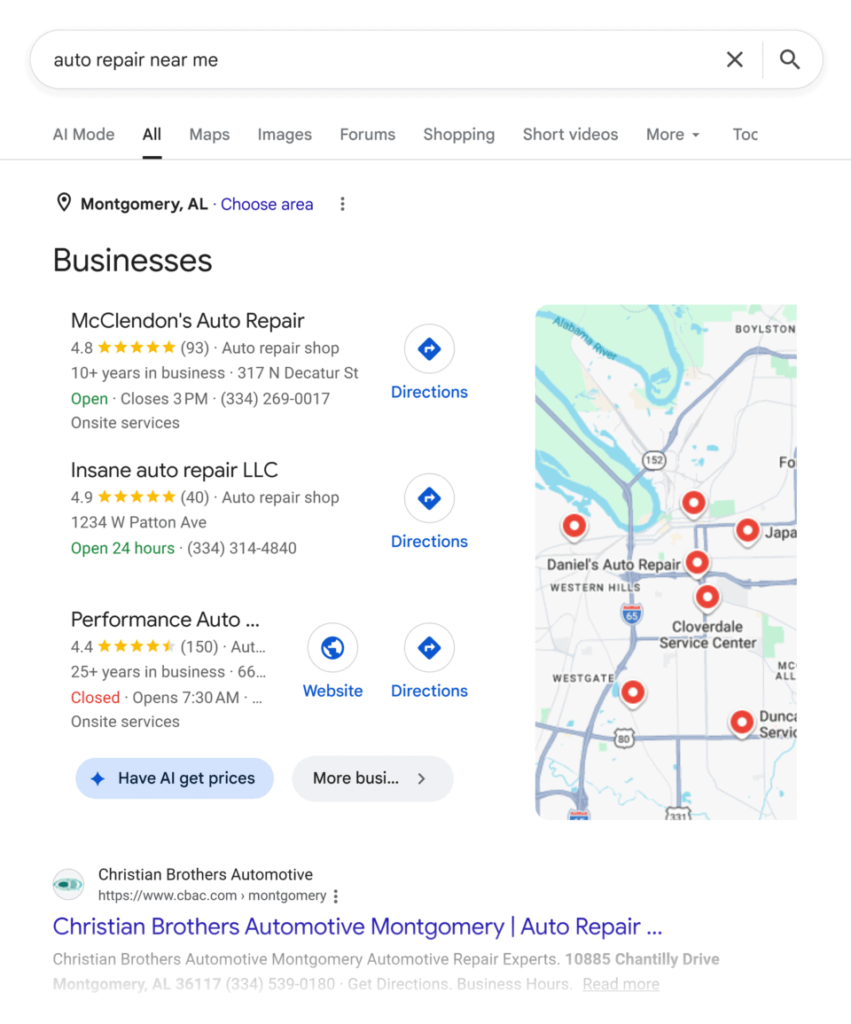
Image from Backlinko
How Does Multi-Location SEO Differ from Standard SEO?
The fundamental difference is the geographic focus. Standard SEO typically builds site-wide authority around broad, non-location-specific keywords. On the other hand, multi-location search visibility scales local optimization across multiple geographic markets while reducing unnecessary competition between individual locations.
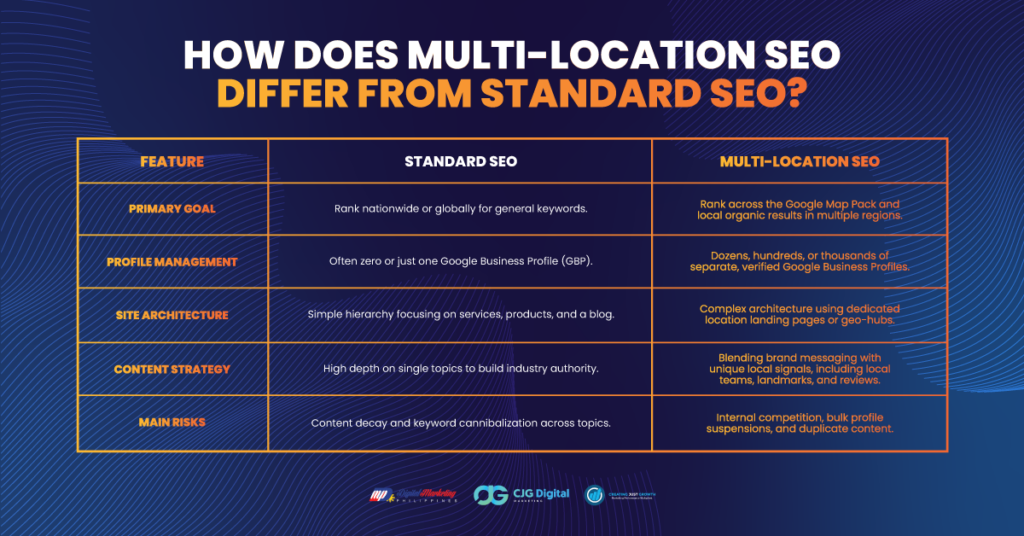
The Essential Multi-Location SEO Strategy Guide
To systematically dominate regional search markets, enterprise marketing teams must implement a structured framework using these 11 advanced multi-location search visibility techniques:
1. Structure a Scalable, Organized Subfolder URL Architecture
Avoid forcing search crawlers to navigate messy subdomains or unindexable JavaScript-heavy store locator widgets. Every physical storefront should have its own indexable, clean URL sitting within a logical subfolder structure on your primary domain.
The ideal architecture flows from broad to specific:
- www.business.com/
- www.business.com/service-area/
- www.business.com/service-area/cavite/
Using a consistent subfolder structure allows location pages to inherit your main website’s foundational domain. It also makes it easier to segment location-level organic performance when analyzing data in Google Search Console (GSC).
2. Build High-Context Localized Pages
The most common mistake enterprise brands make is using a single template, copying the same text across dozens or hundreds of city pages, and simply replacing the city name. While this saves time, pages that provide little unique value may resemble the types of doorway or scaled content Google warns against.
Every location landing page should provide meaningful information that helps visitors understand and interact with that specific branch, such as:
- Clear, distinct descriptions of that specific branch’s unique offerings or specialties.
- Current local operating hours, including holiday adjustments when applicable.
- An embedded, localized Google Maps interactive element.
- Hyper-local transit markers, parking instructions, or neighborhood-specific landmarks.
- Original photos of the actual storefront, interior, and local staff.
3. Claim and Bulk-Verify Separate Google Business Profile
Claiming an independent Google Business Profile (GBP) for each eligible storefront is not simply for satisfying the algorithm. It also gives customers a reliable source of business information and can strengthen trust in the brand. In fact, 73% of consumers report a stronger inclination to visit or contact a business with a complete GBP profile.
If you are managing multiple eligible locations, manual postcard verification is highly inefficient. Instead, use Google’s bulk verification process, which allows you to manage 10 or more physical brick-and-mortar locations of the same brand through the Business Profile Manager and effectively verify your entire ecosystem simultaneously.
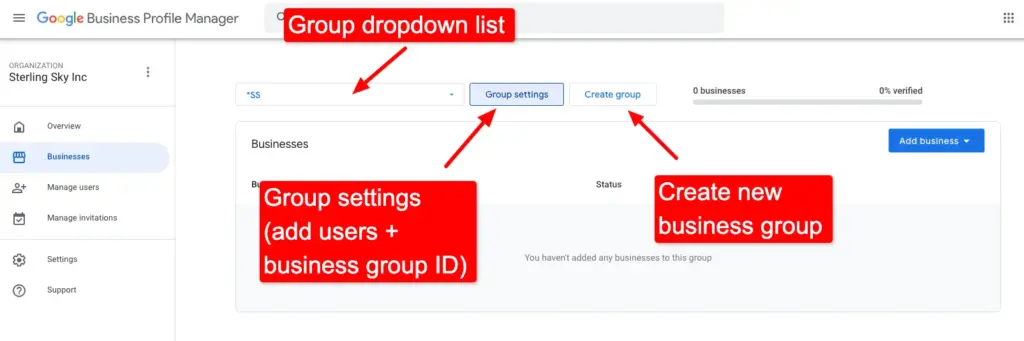
Image from Moz
Once the profiles are verified, link each GBP to its corresponding location page on the website. Google also recommends using the location’s direct URL and phone numbers where available.
4. Implement Granular Local Business Schema Markup
Search engine bots are highly proficient at reading text, but structured data provides additional context about each business location. Deploying dedicated JSON-LD schema markup gives search engines clearer information about each store.
Avoid using the generic LocalBusiness tag. Instead, implement specific schema subtypes, such as AutomotiveBusiness, MedicalBusiness, or FinancialService. If you need help implementing location-specific schema, the best SEO company in the Philippines can select the appropriate schema type and add business details that match each location’s official information.
5. Enforce Strict NAP Consistency Across Core Aggregators
Incorrect or inconsistent information in your business Name, Address, and Phone number (NAP) heavily damages local search rankings. If one directory lists your store at “100 Example Street, Suite B” and another records it as “100 Example St. Ste B,” search might struggle to validate your physical location.
Instead, establish a single internal data standard for every location. Once that information is verified, distribute the same business name, address, and phone number format across major directories, data aggregators, and mapping networks.
6. Geo-target Keywords Beyond General City Terms
Ranking for broad terms like “Café in Chicago” or “hire seo expert Philippines” is incredibly difficult and highly competitive. To capture immediate, high-intent local search volume, narrow down to hyper-local neighborhood keywords.
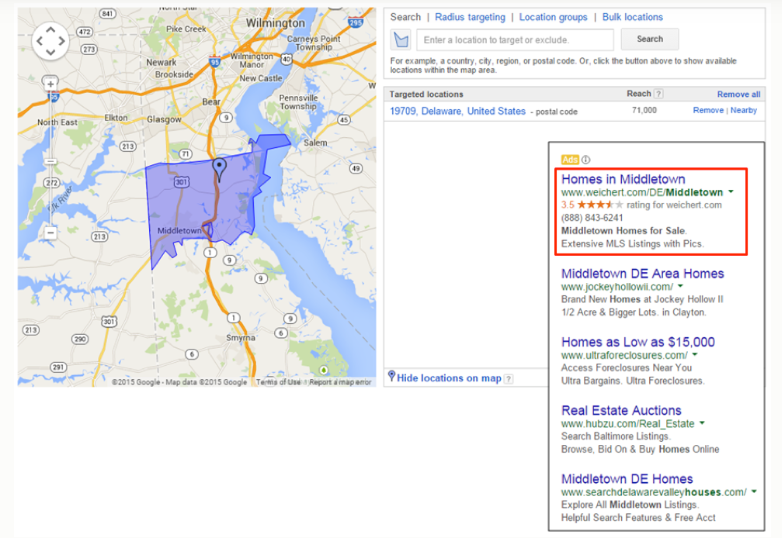
Image from HubSpot
Conduct targeted keyword research to identify the geographic language local searchers actually use. Incorporate regional district names, historical neighborhood titles, and well-known crossroads naturally into your page headers, meta titles, image alt tags, and body copy.
7. Automate Scalable Review Acquisition and Moderation Protocols
Review frequency, diversity, and recency can influence local search visibility and Google Map Pack performance.
Integrate programmatic review software directly into your point of sale (POS) or customer relationship management (CRM) system. After a customer transaction, automate text messages or emails that provide a direct link to your Google Business Profile. Additionally, establish a centralized dashboard where marketing teams can monitor, flag, and respond to incoming reviews with localized keyword context.
8. Cultivate Hyper-Local Backlink Networks
High-authority global backlinks boost your root domain, but individual location pages require localized link equity to outrank independent, single-location competitors.
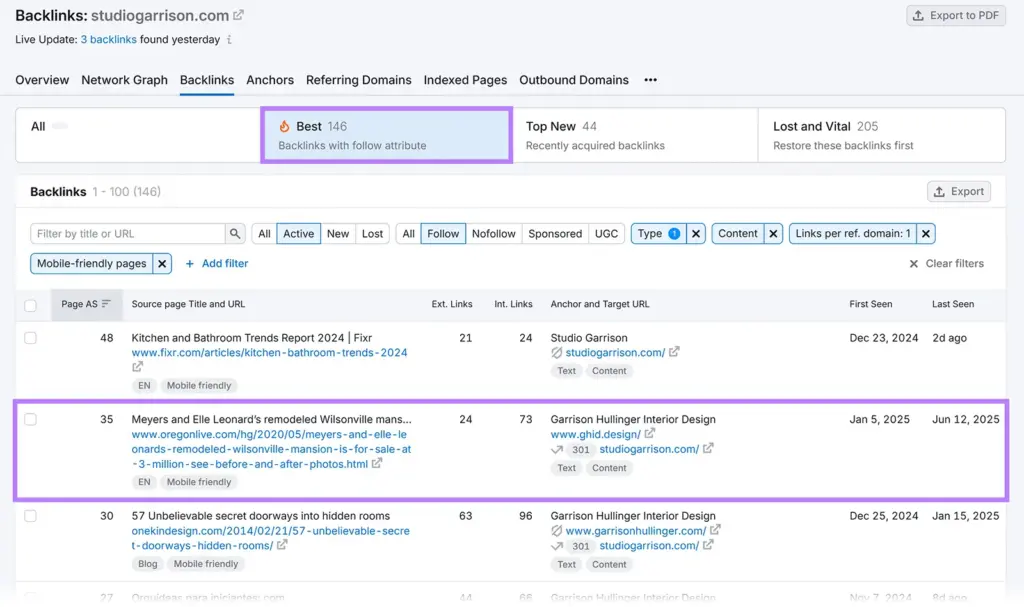
Image from Semrush
You can empower your local branches to secure regional backlinks through community engagement by sponsoring charity runs or joining separate local chambers of commerce and business directories
9. Publish Hyperlocal Content
Generic content often fails to capture regional search intent. To maximize visibility, consider publishing hyper-targeted local content, such as producing neighborhood event guides, regional case studies, and localized industry insights. This strategy signals deep geographic relevance to search algorithms, elevating map pack rankings, establishing regional authority, and attracting local organic traffic with stronger conversion potential.
10. Direct Localized Internal Link Equity Across the Domain
Build a clean, indexable HTML directory that groups locations by state, province, or region. Ensure this directory is accessible through your main website navigation. Where natural, you can also cross-link adjacent service locations inside your body copy using geo-targeted anchor text to help search bots seamlessly crawl and index your entire web network.
11. Optimize Strictly for a Mobile-First User Experience
The vast majority of multi-location local searches occur on mobile devices while consumers are physically on the move. In fact, 33% of users exclusively use their phones to access the internet.
Regularly run your location page templates through Google PageSpeed Insights to audit asset delivery and script execution performance. Also, design your mobile layout with a strict conversion focus, like keeping Click-to-Call buttons, Get Directions map triggers, and online booking fields that are easy to access and tap on smaller screens.
Optimize Visibility Across All Touchpoints With DMP
Completing your Google Business Profile is only the beginning for successful local SEO. When optimizing for multiple branches across various regions, your brand needs to execute holistic local SEO techniques.
Are you ready to expand your local presence? At Digital Marketing Philippines (DMP), we specialize in building scalable, results-driven search strategies tailored specifically for your brand. Our team can handle the bulk of SEO technicalities while you focus on servicing your growing customer base.
Contact us today to unlock your brand’s true multi-location potential.
References:
https://www.semrush.com/blog/seo-techniques
https://www.searchenginejournal.com/local-seo-multiple-locations/370704
https://www.semrush.com/blog/how-to-improve-local-seo
https://searchengineland.com/multi-location-seo-strategy-stop-competing-with-your-own-content-471927
https://img.courses/blog/what-are-geo-targeted-keywords-in-seo/

Jomer B. Gregorio is a well-rounded expert when it comes digital marketing. Jomer is also known as a semantic SEO evangelist and practitioner. Check out our Digital Marketing Services today and let us help you in achieving positive and profitable results for your business.