
Search behavior continues to shift away from established patterns. Audiences now expect faster answers, richer context, and systems that respond with relevance and clarity instead of long result lists. These expectations reshape how organic visibility functions, placing businesses in a landscape influenced by artificial intelligence (AI), user behavior signals, and shifting discovery patterns. Success in 2026 now depends on strategic insight rather than repetition of traditional tactics.
Mapping search change requires understanding how people search, why they search, and how platforms interpret intent. Effective optimization requires alignment between technology and human expectations. Strategies that lack depth struggle to maintain visibility as platforms mature.
Why SEO Trends Shaping 2026 Demand Strategic Reassessment
The familiar list of blue links is no longer the primary way people interact with search results. People now encounter automatically-generated summaries that shape decisions before a click even occurs. Data shows that when an AI summary appears, only 8% of users click on the standard search results beneath it. When no summary is present, nearly 15% click on the results, highlighting how AI-generated summaries shift user attention away from traditional links.
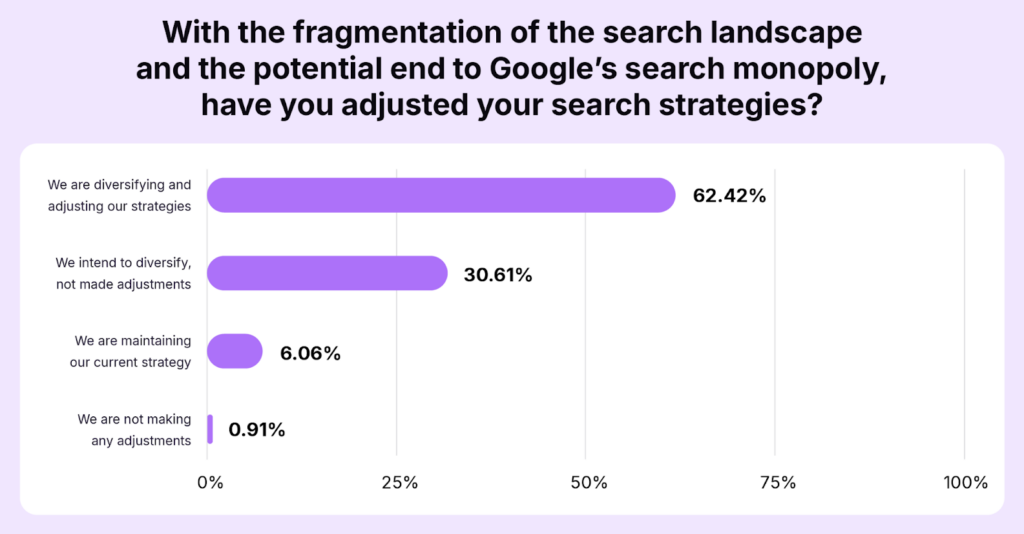
Image from Botify
While SEO still emphasizes delivering value to users, engagement and content credibility have become stronger indicators of relevance than clicks or impressions alone. Algorithm updates favor content that demonstrates subject knowledge and reliability, leaving outdated strategies less effective. Performance in 2026 depends on long-term planning focused on comprehensive, accurate, and reliable content that aligns with evolving search expectations.
SEO Trends 2026
The era of guaranteed website traffic is ending, driven by the rise of zero-click searches and Google’s integration of generative AI features, a shift often called the “traffic apocalypse”. Audiences now explore multiple platforms and touchpoints before engaging with content, forcing businesses to rethink how they attract and retain visitors to remain visible and competitive.
Below are some of the key SEO trends shaping in 2026:
1. AI-Powered Search and Automation
Search engines are increasingly leveraging artificial intelligence (AI) to interpret queries and rank results. Algorithms assess meaning, context, and relationships between topics, moving beyond basic keyword matching. SEO strategy now centers on aligning content with how AI evaluates relevance, structured information, and user intent.
AI also functions as a personalized decision engine, rapidly synthesizing information, comparing options, and narrowing choices within a single interaction. This shift redefines how information is discovered, evaluated, and converted across streaming, scrolling, shopping, and search environments.
Google’s AI integrations highlight this transformation through features such as AI Overviews, AI Mode, AI shopping, and AI-powered configurations in Google Search Console (GSC). These developments indicate that intelligence now shapes discovery, performance measurement, and optimization at every stage of search. It also provides Google with a way to present information and keep users on its platform.
In 2026, effective SEO combines structured, data-driven approaches with AI-informed strategies to reach audiences and maintain visibility within a search landscape shaped by automation and contextual understanding.
2. Content Strategy and Visibility
As AI reshapes how search systems interpret information, content strategy in 2026 determines whether visibility is earned or lost. Users now ask complete questions more often than short keyword phrases. Voice assistants, chat interfaces, and AI summaries shape search patterns, making conversational phrasing increasingly important. Search engines now prioritize content that addresses intent rather than merely containing targeted terms or using comparison or alternative keywords.
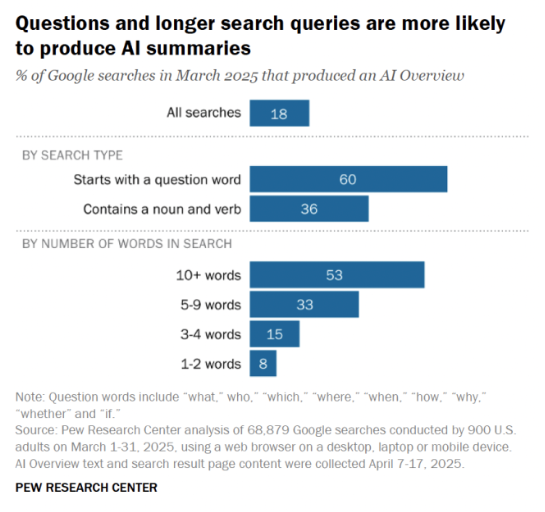
Image from Pew Research Center
A question-based long-tail keyword captures these naturally phrased queries. Pages that respond precisely to such questions improve user satisfaction and retention. Clear, concise answers also help search platforms interpret content more effectively, enhancing visibility in rich and featured results.
Adapting to 2026 search landscapes means focusing on relevance, clarity, and discoverability in every piece of content. Key strategic areas include:
- E-E-A-T – Pages demonstrating experience, expertise, authority, and trustworthiness have always mattered and will continue to rank higher in 2026. Credible references and structured information help search engines evaluate quality. Content should meet users’ needs by being unique, valuable, and satisfying for both search visitors and regular readers.
- AI-Focused Optimization – Producing high-quality, informative content is essential, but SEO success in 2026 requires aligning with how AI interprets and surfaces information. Because AI-driven discovery delivers significantly higher-value traffic, where the average LLM visitor generates 4.4 times more value than a traditional organic search, content strategies must adapt to how AI retrieves and evaluates information. Pages that integrate these strategies earn better visibility in both traditional search and AI-generated results.
To perform well in AI-mediated search, content strategies should address four core areas:
- Access: Make content visible to crawlers and large language models (LLMs) so information can be discovered and processed
- Visibility: Structure content for efficient retrieval and citation in AI-generated responses. Clear headings, structured data, and well-organized information help AI use content in answers or recommendations.
- Engagement: Provide useful answers and insights that attract meaningful user interaction.
- Relevance: Maintain content relevance by keeping it refreshed, cited, and recognized over time
- Multimodal Search Discovery – Search in 2026 extends beyond text-based queries. When users spot a product they recognize visually but cannot name, they can snap a photo with Google Lens or Circle to Search, which lets them search by image rather than words. This approach changes how discovery and product lookup occur within the search process.

Image from Backlinko
To perform well in multimodal search, content must integrate multiple formats effectively. Videos, images, infographics, and interactive elements strengthen engagement when they reinforce the same message as text. Clear labeling, captions, and hierarchy help both humans and algorithms interpret content, supporting visibility across diverse discovery formats.
3. Technical and Structural SEO
Even as content and AI integration evolve, technical SEO remains essential. Site speed, mobile responsiveness, secure protocols, structured data, and crawlable architecture directly influence discoverability. Poorly optimized sites struggle to maintain rankings, regardless of content quality.
Technical improvements also support AI-driven search. Proper schema markup and structured data ensure content is correctly interpreted, enabling accurate appearance in voice queries, knowledge panels, and other rich results. In 2026, search performance will depend on the seamless combination of technical precision and strategic content, laying the foundation for effective engagement and visibility.
4. User Experience and Engagement Metrics
Meeting user expectations is crucial to SEO in 2026 as behavioral signals continue to influence how pages are evaluated. Time on page, scroll depth, click behavior, and interaction with page elements reflect how well content meets user needs. Pages that prioritize readability, navigation, and clarity consistently outperform those that focus only on keywords or link-building.
A human experience keyword reflects this emphasis on clarity and ease of use. Content structured for seamless comprehension encourages readers to stay longer, explore further, and interact meaningfully. Search engines reward this behavior by signaling relevance and authority, thereby strengthening visibility over time.
5. Optimizing for Local Visibility
Regional behavior varies widely, influenced by language nuances, cultural expectations, and preferred platforms. Businesses targeting specific areas must adapt content tone, structure, and presentation to reflect these distinctions. Local signals, such as maps, reviews, and localized schema, continue to influence ranking in geographically relevant searches.
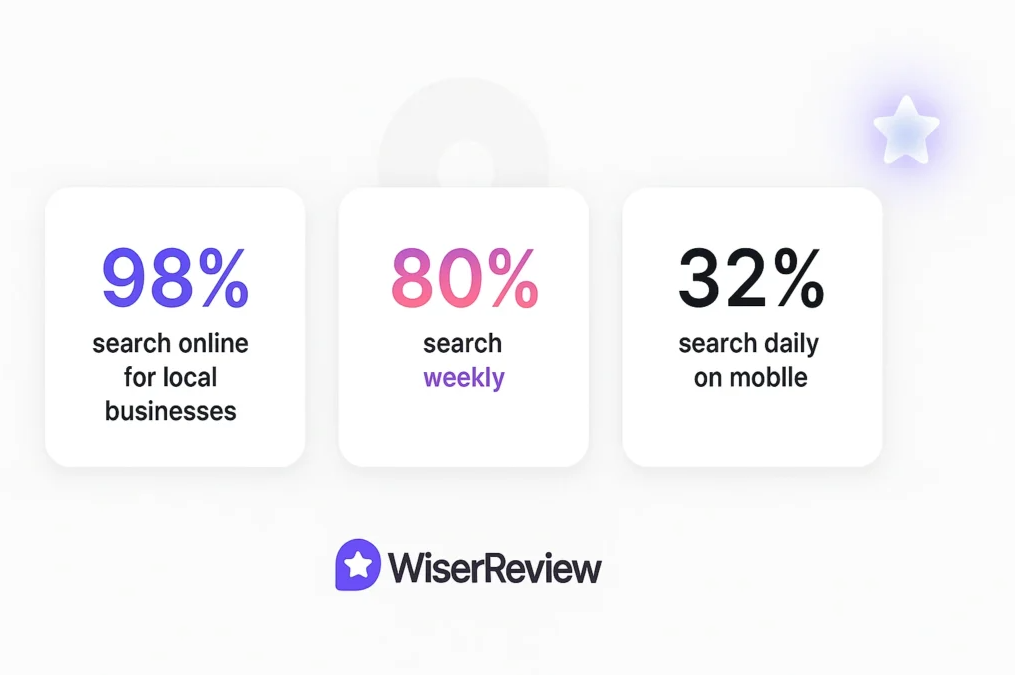
Image from WiserReview
A marketing agency Philippines demonstrates how local expertise enhances relevance. Understanding local search patterns, cultural context, and audience preferences improves the effectiveness of both content and technical optimization. Aligning content with local behaviors strengthens visibility in specific markets while supporting broader search performance when combined with credibility and authority signals.
6. Authority, Links, and Trust Signals
Search platforms now evaluate credibility based on the consistent delivery of high-quality information. Authority is measured by backlinks from reputable sources, structured knowledge, user interaction, and sustained content performance across topics. Single, isolated pages are no longer sufficient to signal trustworthiness.
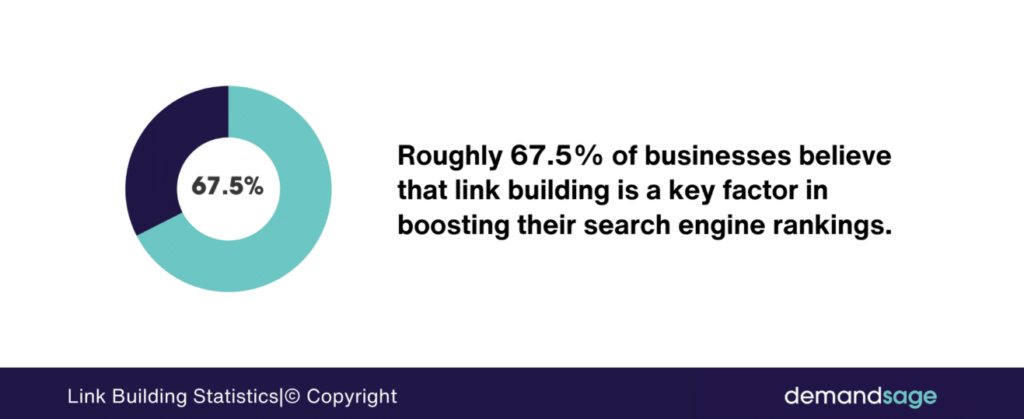
Image from Demandsage
Recognition as the “best SEO agency Philippines” reflects demonstrated reliability and expertise. Authority builds over time through structured content, consistency, and accurate interpretation by users and search engines. Pages that establish credibility across multiple touchpoints are rewarded with stronger, sustained rankings.
Own the 2026 Search Landscape With DMP
SEO in 2026 demands more than traditional tactics. It requires a strategic approach that keeps pace with evolving search intent, conversational queries, and emerging AI-driven technologies. Businesses that adapt to these trends position themselves to maintain relevance, maximize discoverability, and thrive in a search landscape that is smarter, more conversational, and increasingly dynamic.
With Digital Marketing Philippines (DMP), we help your brand achieve its full potential in visibility, engagement, and impact. Our expertise equips businesses to navigate the evolving SEO landscape and leverage the trends shaping 2026. We combine proven strategies with innovative solutions to ensure your business stays ahead in search and maximizes growth opportunities.
Don’t let your business fall behind—contact us today to craft a forward-looking SEO strategy that delivers measurable results in 2026 and beyond.
References:
https://www.searchenginejournal.com/key-enterprise-seo-and-ai-trends/532337
https://www.semrush.com/blog/seo-branding
https://business.google.com/aunz/think/ai-excellence/ai-powered-search-behavior
https://blog.hubspot.com/marketing/blog-traffic-loss-explainer
https://blog.google/products-and-platforms/products/search/google-search-lens-october-2024-updates
https://searchengineland.com/seo-2026-stay-same-467688

Jomer B. Gregorio is a well-rounded expert when it comes digital marketing. Jomer is also known as a semantic SEO evangelist and practitioner. Check out our Digital Marketing Services today and let us help you in achieving positive and profitable results for your business.