
In 2026, conversion rate optimization (CRO) has evolved from a tactical marketing sub-task into a foundational business growth discipline. As acquisition costs rise and AI-driven search increasingly filters out casual browsers before they even reach a website, the visitors who do land on a page are higher-intent and more expensive than ever.
In this landscape, visibility without conversion represents lost revenue potential. CRO trends in 2026 are defined by revenue efficiency, turning existing traffic into higher returns through smarter, data-backed strategies.
Why CRO Matters More Than Ever
Conversion rate optimization has shifted from a nice-to-have to a survival strategy. With cart abandonment rates hovering around 70.22%, billions in potential revenue remain untapped across digital commerce.
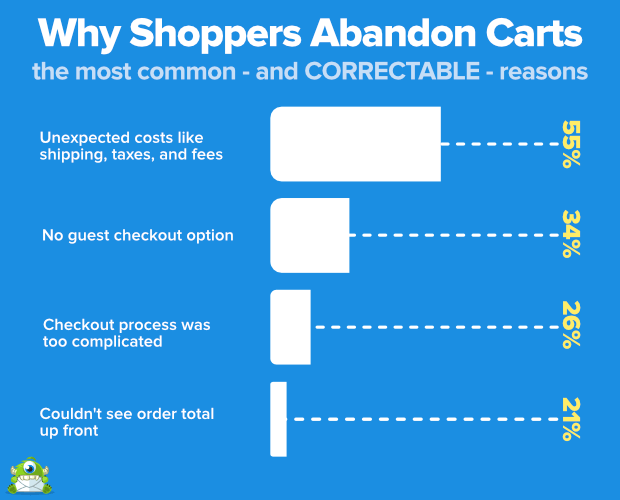
Image from WiserNotify
There are three major reasons why CRO is now a necessity in growth efficiency:
- Surging Acquisition Costs – With paid ad costs hitting record highs, brands can’t afford to waste a single click. CRO turns already-paid traffic into greater revenue, effectively lowering customer acquisition costs (CAC) without increasing ad budget.
- The AI Filter – Search engines now use AI to provide instant answers, meaning only the highest-intent visitors actually land on a site. If a website’s user experience (UX) does not immediately meet their needs, customers will bounce back to AI-generated results within seconds.
- Privacy and Data – Cookieless marketing is becoming more mainstream, making a brand’s website the most reliable data source. CRO-driven interactions capture essential zero-party data, allowing businesses to build direct customer relationships.
These factors are some of the reasons why CRO trends in 2026 are evolving beyond one-off tweaks. Modern strategies focus on adaptive experiences that automatically respond to user signals, compounding improvements rather than resetting experiments every week.
TOP CRO Trends in 2026 for Success
Manipulating customers into clicking buttons is no longer a viable strategy. Today’s conversion rate optimization techniques focus on designing experiences that center around intent, removing friction, and guiding users naturally toward meaningful action.
1. Hyper-Personalization as the New Baseline
Personalization is now considered a baseline user expectation. In fact, HubSpot’s State of Marketing Report found that 93% of marketers consider personalization effective at improving lead and purchase conversion rates.
A CRO-driven design transforms static landing pages into adaptive experiences. This can be achieved using AI-powered CRO tools to adjust headlines, visuals, and offers based on a user’s immediate context, including device type, location, and real-time browsing behavior.
Additionally, personalized calls to action (CTAs) will replace basic, generic, one-size-fits-all messaging. Personalized CTAs work because instead of forcing users to self-select relevant offers, they deliver messages that match user intent, boosting conversion rates while reducing friction.
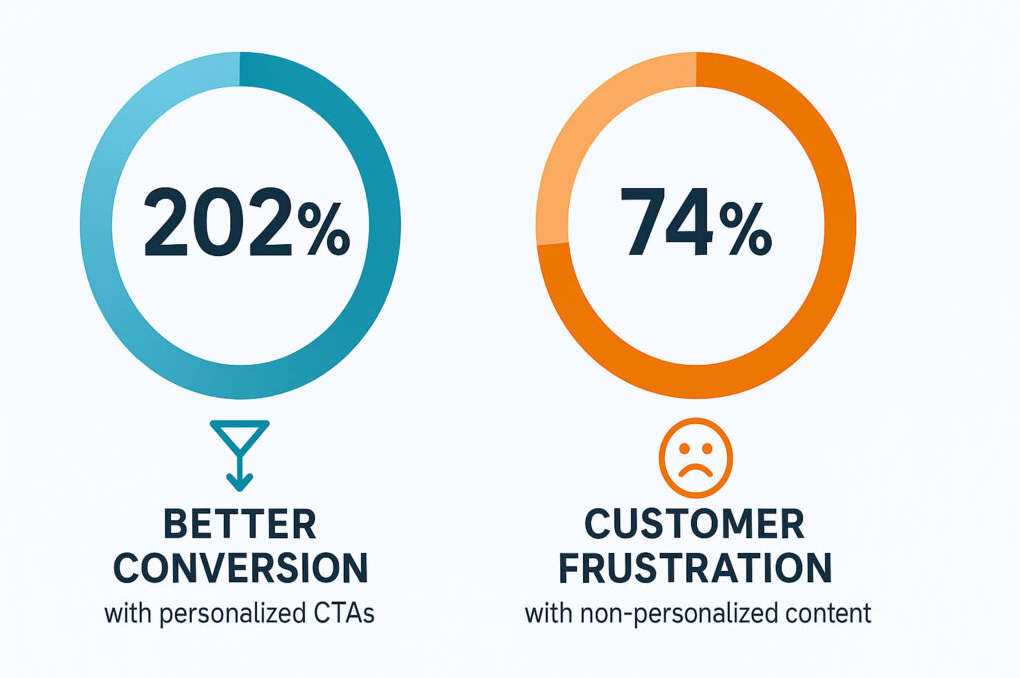
Image from Aprimo
2. Leveraging Behavioral Psychology and Trust
Users are becoming more skeptical as AI-generated content floods the web. As a result, CRO best practices are moving away from manipulative persuasion in favor of facilitation—removing psychological obstacles that prevent action.
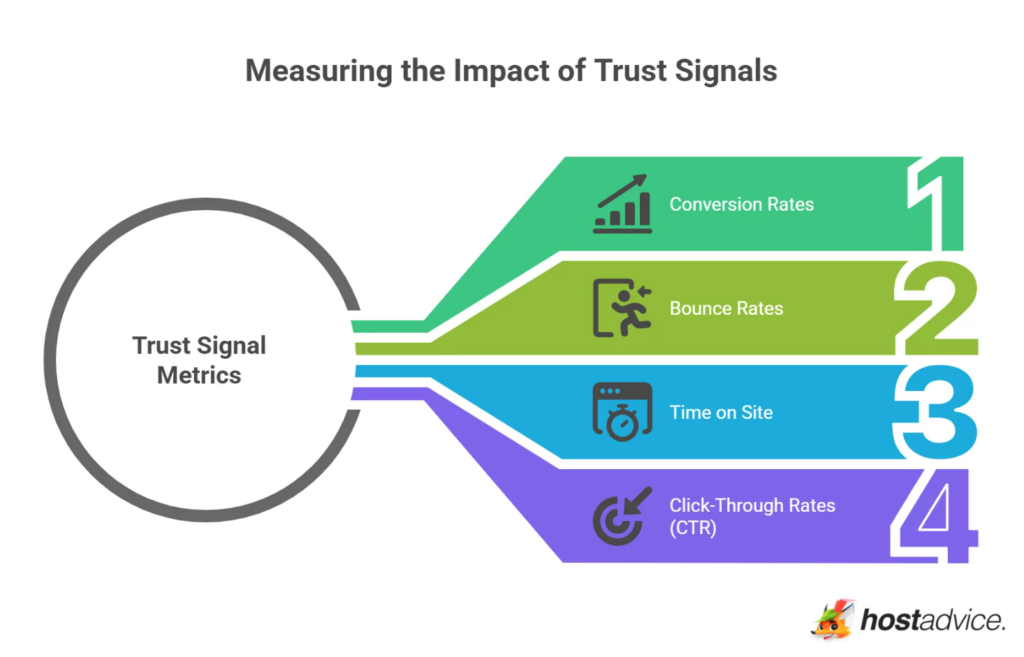
Image from Hostadvice
The principles of E-E-A-T are not just applicable to search algorithms; they’re also a helpful guideline in earning user trust:
- Trust as a Core Lever – Social proof, such as authentic user-generated content and reviews, is now placed exactly where doubt typically arises. This can be near payment fields or price sections.
- Ethical Persuasion – Pressuring users with fake countdown timers is no longer a reliable tool in urging consumers to make a purchase. Instead, CRO trends in 2026 focus on honest urgency through genuine deadlines and real-time stock levels to support decision-making.
- Cognitive Load Reduction – High-converting sites prioritize clarity over clever design, ensuring users understand the value proposition within seconds of landing.
- Checkout Optimization – Broken checkouts are where most brands lose their customers, largely because they create room for hesitation. CRO-driven checkouts resolve many issues, including hidden costs, complicated steps, time requirements, and payment concerns.
3. Page Acceleration for Capturing Impatient Visitors
Page speed remains a core aspect of an effective conversion rate optimization strategy. With almost half of users expecting sites to load under 2 seconds, ensuring optimal site speed is essential in delivering a positive user experience.
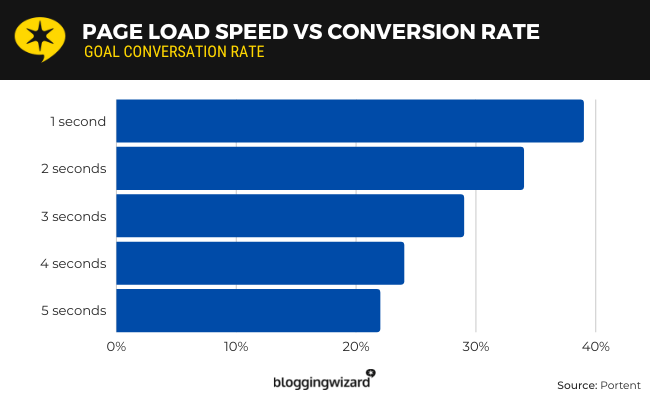
Image from Bloggingwizard
2026 CRO must bridge the gap between intent and action in milliseconds. This begins with optimizing assets using AVIF formats and edge computing to ensure sites feel instantaneous, aiming to render primary content in under 1.2 seconds. Pair this with single-field forms and high-contrast sticky CTAs to eliminate friction.
4. High-Velocity Testing and Strategic Management
Data is still considered the backbone of CRO, but modern strategies change how interpretation is performed. Instead of random A/B testing, CRO trends in 2026 focus on faster, structured experimentation guided by clear hypotheses. Marketing agency Philippines teams can also reduce guesswork by running multiple controlled tests and scaling winning variations faster.
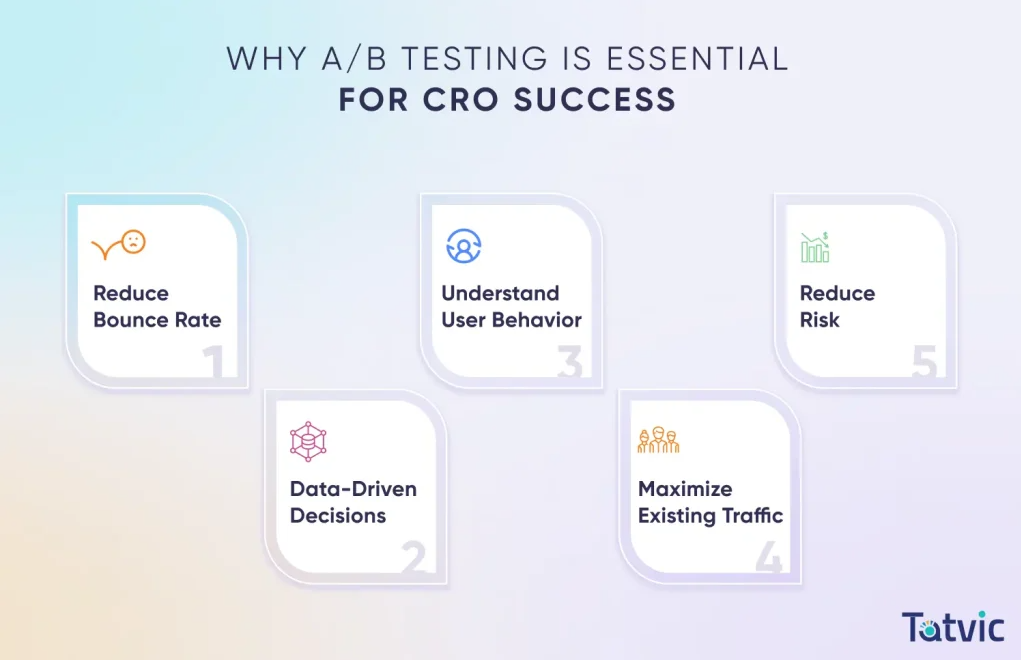
Image from Tatvic
CRO success metrics are also not confined to a single percentage. Teams now track several factors, such as revenue per visitor (RPV), customer lifetime value (CLV), and micro-conversions, to measure long-term performance.
5. Closing the Mobile Gap
Mobile devices account for the vast majority of online traffic, with studies by Quantumrun showing they account for over 64.35% of web visits. And yet, mobile conversion rates are only around 2.85%, while desktop conversion rates average roughly 3.9%. For CRO trends in 2026, closing this gap is the ultimate priority.
The mobile-first CRO strategy hinges on redesigning mobile experiences from scratch instead of adapting a desktop design to smaller screens:
- Thumb-Zone Architecture – Designing interfaces for one-handed use improves comfort and usability for mobile visitors.
- Mobile-Specific Form Fields – Form filling should be smoother and easier for mobile users. For instance, phone number fields should invoke numeric keypads, while date fields should have date pickers.
- Autofill and Password Manager Integration – Inputting long strings of information is cumbersome for mobile users. A CRO-driven design enables autofill and password managers to remove friction in critical conversion situations.
- Adequate Sizing – Redesigning buttons for fingers enhances the user experience and prevents accidental taps.
Turn Visitors Into Customers With DMP
Successful brands understand that conversion rate optimization is not simply about fixing website elements. Modern CRO strategies center on building an adaptive digital environment that respects the user’s time, intent, and privacy. Technology and AI support these efforts, but meaningful user experiences remain the foundation of strong conversion performance.
A well-designed CRO strategy is your significant “unfair advantage” against your competitors. At Digital Marketing Philippines (DMP), we turn these strategies into practical execution to ensure your brand gains the upper hand.
With over a decade of providing comprehensive digital marketing services to brands worldwide, DMP combines SEO, paid advertising, and CRO to build digital experiences that convert consistently and sustainably.
Contact us to start optimizing where it matters today. We also offer comprehensive Digital VA Philippines services to elevate your company’s marketing efforts without the overhead costs.
References:
https://fibr.ai/conversion-rate-optimization/cro-strategy
https://vwo.com/conversion-rate-optimization/conversion-rate-optimization-trends
https://www.hubspot.com/marketing-statistics
https://www.quantummetric.com/blog/CRO-marketing-strategies-boost-conversions

Jomer B. Gregorio is a well-rounded expert when it comes digital marketing. Jomer is also known as a semantic SEO evangelist and practitioner. Check out our Digital Marketing Services today and let us help you in achieving positive and profitable results for your business.