
A customer looking for a reliable service provider might start with a Google search, then turn to ChatGPT for recommendations or a quick comparison. Although the platforms present information differently, both rely on online content to help users find relevant answers.
This brings two related practices into focus: search engine optimization (SEO), which improves a website’s visibility in search results, and generative engine optimization (GEO), which helps brands appear in AI-generated responses.
While their approaches differ, both depend on relevant, accessible, and credible content. Strong SEO therefore provides the foundation for effective GEO, helping businesses build visibility across traditional and AI-powered search.
The Shared Foundations of SEO and GEO
SEO and GEO may serve different purposes, but they rely on many of the same principles. A well-planned SEO and GEO strategy builds on these shared foundations to help businesses strengthen their search presence and adapt to how AI platforms discover and reference online content.
These elements include:
- Accessibility – Search systems need to access and process website content.
- Relevance – Pages should address users’ questions and search intent.
- Clear structure – Organized headings and internal links help search systems understand how related information connects.
- Credibility – Accurate content and demonstrated expertise help establish trust.
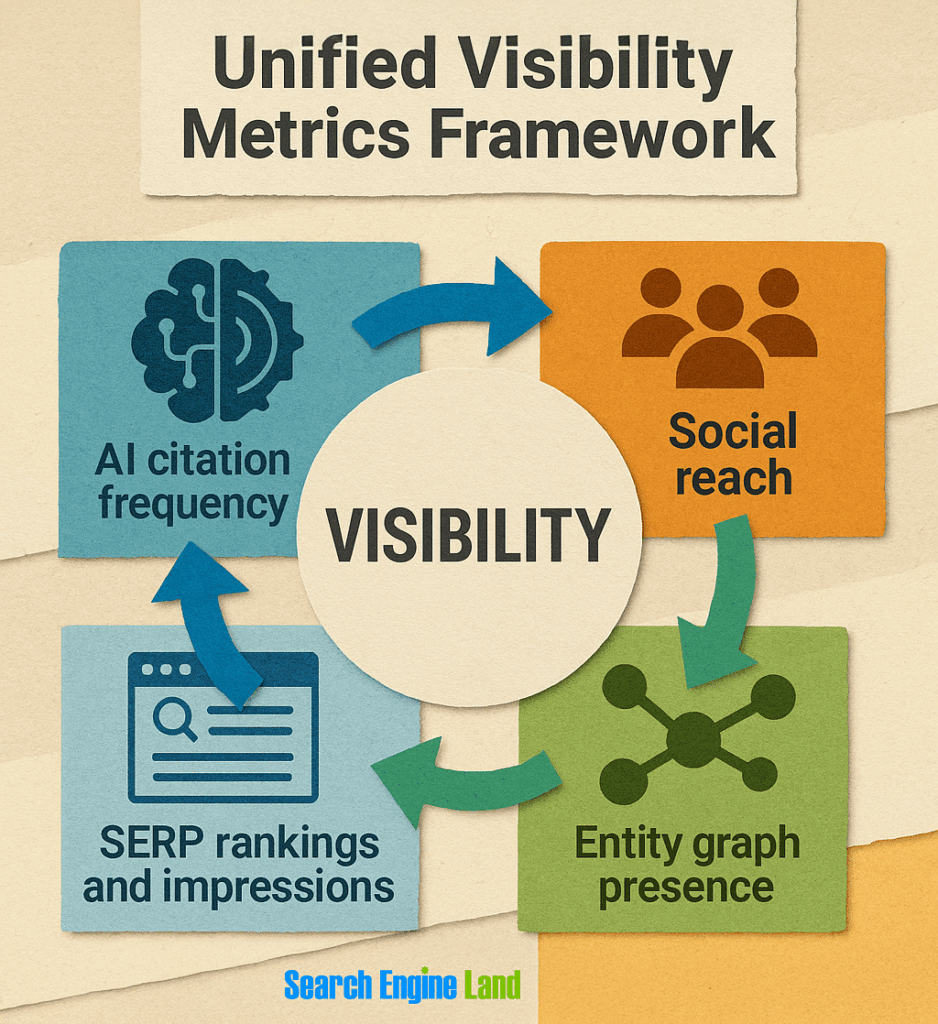
Image from Search Engine Land
Google’s guidance reinforces this connection. Its AI search features rely on existing search systems, and established SEO practices remain relevant. Further, Google does not require additional technical optimizations specifically for AI Overviews or AI Mode. However, pages must still meet its standard search eligibility requirements.
This makes GEO and SEO complementary, not competing, approaches. Alongside large language model optimization (LLMO) and generative AI optimization (GAIO), they support a broader approach to visibility across traditional search engines and AI-powered platforms. Knowing how LLMO, GAIO, GEO, and SEO work together helps businesses adapt to these evolving search experiences.
Why Strong SEO Supports Effective GEO
Strong organic search performance and AI visibility share more common ground than they may initially appear to. This connection makes established SEO practices valuable for effective GEO.
1. Technical SEO Makes Content Accessible
For content to be considered in AI-generated answers, search systems must first be able to access and process it. Technical SEO helps make website information easier to discover through:
- Crawlability and Indexability – Keep important pages accessible to search engines.
- Website Performance – Improve loading speed, mobile usability, and page experience.
- Site Architecture – Use clear navigation and logical internal links to connect related content.
- Structured Data – Apply relevant markup that accurately reflects visible page information.
- Website Security – Maintain HTTPS and address security issues.
These improvements support effective GEO by making useful website content accessible to search systems. However, technical optimization alone does not guarantee AI visibility or citations.
2. High-Quality Content Gives AI Systems Useful Information
AI platforms need reliable content to generate relevant answers, explain topics, and compare options. Businesses can improve their chances of being referenced by creating content that:
- Answers specific questions clearly and directly.
- Uses descriptive headings to organize related information.
- Supports claims with relevant facts, examples, and evidence.
- Updates outdated details and corrects inaccuracies.
- Includes original insights and demonstrates practical experience.
Google’s guidance for AI search emphasizes helpful, original content. For effective GEO, businesses should prioritize useful answers and meaningful details over keyword repetition or generic explanations.
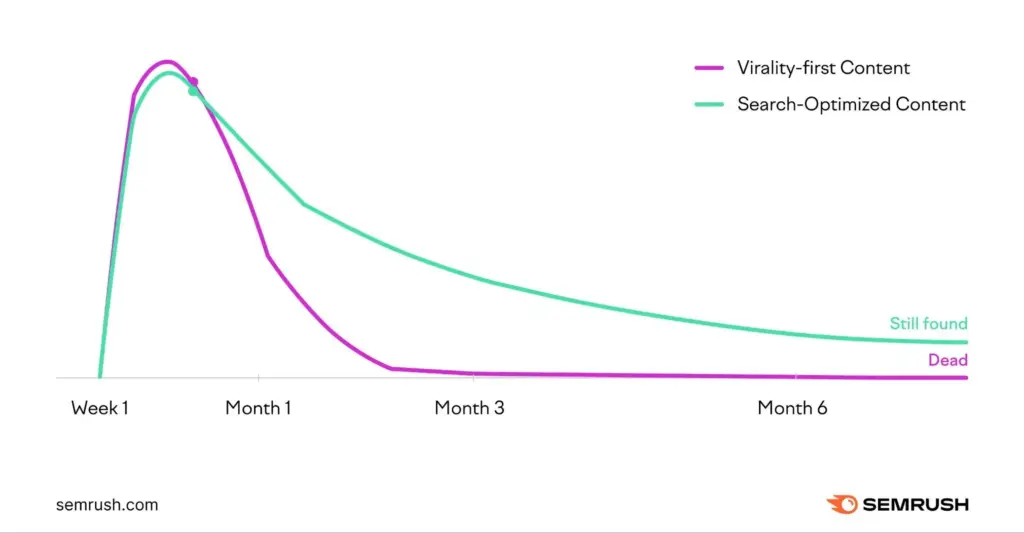
Image from Semrush
3. Authority and Trust Strengthen Brand Visibility
AI-generated answers can draw on multiple sources, so credibility is a key part of effective GEO. As a solution, businesses can strengthen their reputation through:
- Earning relevant backlinks from reputable websites
- Publishing accurate, well-supported information
- Featuring expert insights and practical experience
- Maintaining consistent business details across platforms
- Building a positive reputation through genuine customer feedback
Consumer trust also matters. A September 2025 Gartner survey of 377 U.S. consumers found that 53% distrusted or lacked confidence in the reliability and impartiality of AI search results. Additionally, 41% felt that generative AI overviews made searching more frustrating than traditional search methods. These findings suggest that appearing in AI-generated answers is not enough, as businesses must also provide credible information that audiences can verify and trust.
Building authority takes time, but consistent publishing, accurate information, and demonstrated expertise can help businesses strengthen their credibility with both readers and AI-powered search systems.
How to Adapt Your SEO Strategy for Effective GEO
As users turn to AI platforms for recommendations, comparisons, and specific answers, businesses need content that addresses more conversational and detailed queries. Here are some practices that can help adapt an existing SEO strategy for effective GEO:
Create Content Around Search Intent
Go beyond high-volume keywords by identifying the questions and concerns behind each search. For example, users might ask AI platforms to:
- Compare services or providers.
- Explain pricing and package inclusions.
- Recommend agencies for a specific business type.
- Suggest strategies for reaching a particular audience.
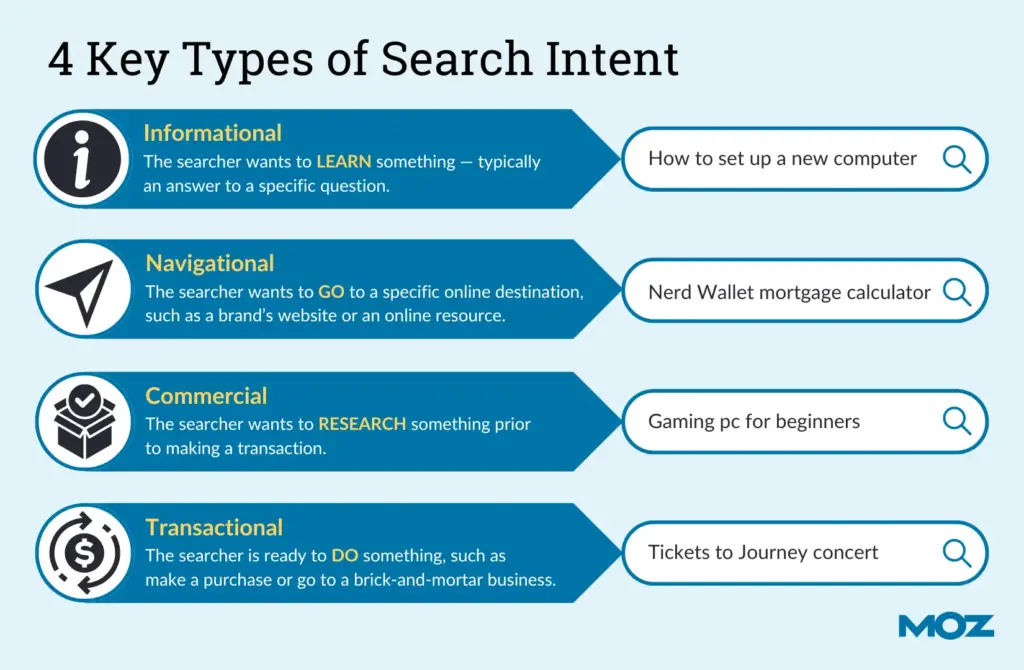
Image from Moz
Pricing is another common concern among potential customers. Businesses can address questions about service inclusions, pricing factors, and SEO cost in the Philippines to help prospective clients compare providers and evaluate their options.
Addressing these queries helps businesses create relevant content for different stages of the customer journey.
Organize Information Clearly
A clear content structure makes information easier for readers and search systems to interpret. Focus on:
- Descriptive headings that reflect each section’s topic.
- Direct answers supported by relevant details.
- Lists and tables for information that needs comparison.
- FAQs addressing common audience questions.
Good formatting supports effective GEO, but AI citations involve more than content structure. Content must still be accurate, relevant, and useful.
Maintain Consistent Brand and Location Information
Keep business names, services, addresses, and contact details consistent across website and other online platforms. Applying relevant local SEO techniques and geolocation optimization practices can also strengthen location-based visibility.
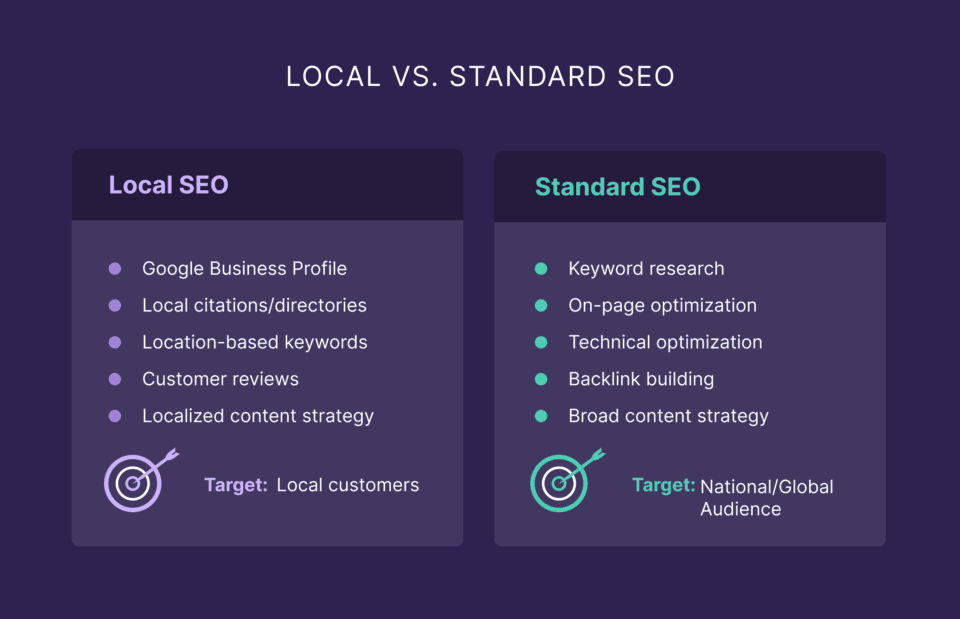
Image from Backlinko
Monitor Visibility Across Search Channels
AI-generated summaries are becoming a more visible part of the search experience. A Pew Research Center analysis of March 2025 browsing data found that 58% of surveyed U.S. adults conducted at least one Google search that displayed an AI-generated summary.
Businesses should therefore monitor more than traditional keyword rankings. Useful indicators include:
- Organic search rankings and website traffic.
- Brand mentions and citations in AI-generated answers.
- AI referral traffic, where measurable.
- Visibility across relevant topics and queries.
- Engagement and conversions from different search channels.
Tracking these indicators can help businesses understand how their content performs across traditional and AI-powered search. However, AI visibility measurement is still evolving, so these metrics should complement, not replace, established SEO performance measures.
Build a Stronger SEO and GEO Strategy With DMP
AI-based search experience is changing how people discover businesses, but a strong SEO foundation remains essential for building online visibility. Rather than starting from scratch, businesses can build on established SEO practices to address the demands of AI-powered search.
At Digital Marketing Philippines (DMP), we help businesses build structured SEO campaigns that support long-term visibility. Our approach combines technical improvements, relevant content, and strategic optimization to strengthen search performance.
Through our affordable SEO service in the Philippines, we help companies identify opportunities, address website and content gaps, and implement SEO strategies that align with your goals, customer base, and position in the market.
Get in touch with us to explore how a well-planned SEO approach can support your visibility across traditional and generative search.
References:
https://developers.google.com/search/docs/appearance/ai-features
https://developers.google.com/search/docs/fundamentals/creating-helpful-content
https://www.semrush.com/blog/geo-vs-seo

Jomer B. Gregorio is a well-rounded expert when it comes digital marketing. Jomer is also known as a semantic SEO evangelist and practitioner. Check out our Digital Marketing Services today and let us help you in achieving positive and profitable results for your business.