
Artificial Intelligence (AI) represents the most significant transformation in digital marketing. Since the development of large language models (LLMs) like ChatGPT and Google AI Overviews, users are discovering better ways to get answers directly in the search results.
With around 80% of searches ending in zero clicks, it is time for businesses to rethink their search engine optimization (SEO) strategies. AI-first SEO is an emerging solution that bridges the gap between traditional organic search and AI-powered results.
The Key Principles of AI-First SEO
AI-first SEO marks a shift from optimizing solely for keyword rankings toward making content discoverable, cited, and understood by generative AI models. This approach combines traditional, high-quality SEO with answer engine optimization (AEO), focusing on authority, structured data, and direct answers to user intent.
Instead of asking “what keywords to target”, AI-first SEO answers “what questions do buyers ask AI models when evaluating. At its core, the SEO AI agency model is guided by a set of principles that go beyond tactics:
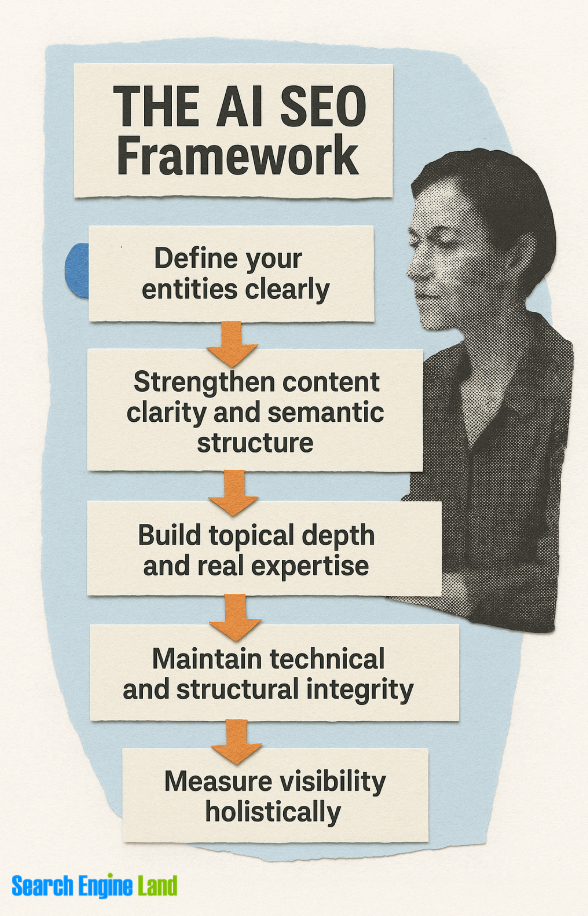
Image from Search Engine Land
- Human Experience and Value – Rather than just ranking for keywords, content must deliver genuine utility and clarity for readers. AI models reward content that answers questions directly and provides trustworthy signals.
- Content as Data – AI models favor content with structured formatting, schema markup, and structured metadata since it is easier to parse and cite efficiently.
- Authority and Trust Signals – An AI-first SEO platform leans heavily on credibility. Building brand reputation, earning citations, and demonstrating expertise are fundamental factors in ensuring visibility in AI-driven search environments.
- Entity and Intent Alignment – AI models interpret queries semantically, so clarity around “who/what/why” matters more than exact phrasing. Beyond keywords, content must be aligned with people, places, and concepts.
- Continuous Adaptation – AI-first SEO is iterative, which means strategies must be tested, measured, and refined to stay relevant.
The Essential AI-First Playbook
Achieving online visibility and relevance in 2026 requires a carefully planned AI-first SEO strategy. Below are the key steps to ensuring discoverability across diverse platforms:
1. Answer Engine Optimization (AEO)
Answer engine optimization (AEO) is the process of structuring digital content to be easily interpreted, trusted, and cited by AI-powered search engines. AEO focuses less on ranking keywords and more on providing concise, direct answers and earning citations within conversational AI responses.
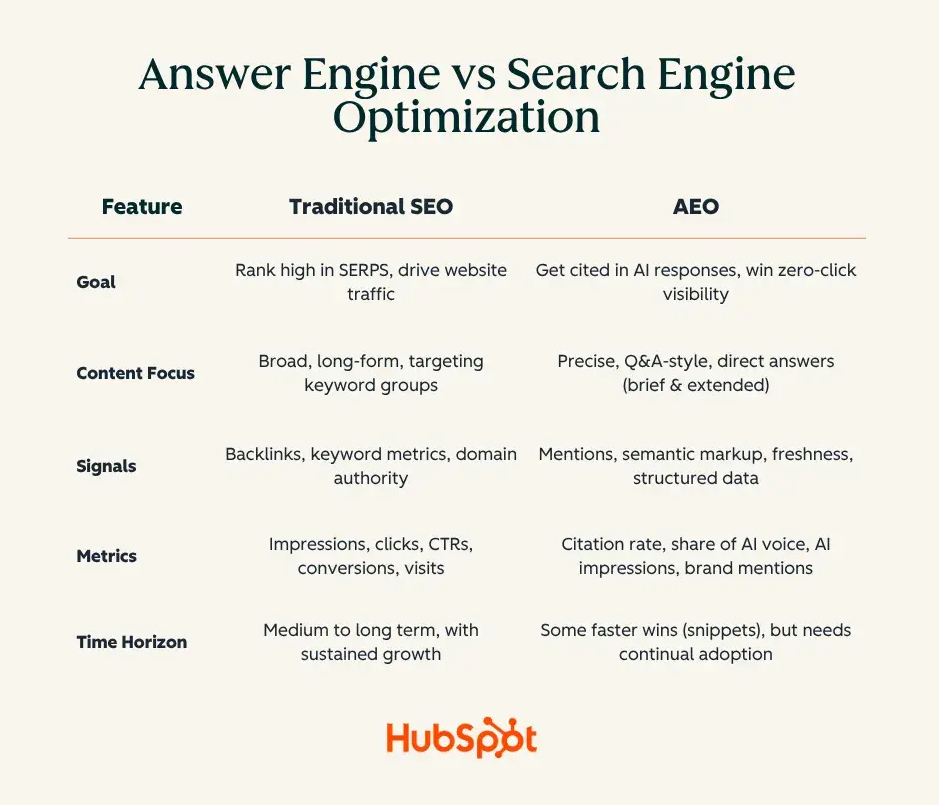
Image from HubSpot
As an integral part of the overall AI-first SEO strategy, performing AEO is essential in ensuring AI discoverability:
- Concise Answers – Place key responses within the first 40-60 words of content. Additionally, use H2 and H3 tags phrased as specific questions.
- Structured Content – Using bullet points, tables, and frequently-asked-questions (FAQs) sections makes content easier for AI to extract.
- Voice Search and Alignment – AEO optimizes for natural, conversational queries used not just in traditional search but also in voice search.
2. Semantic Search and User Intent
AI-first SEO went from simple keyword matching to semantic intent satisfaction. This means optimizing around concepts and intent, ensuring generative models can connect content to the questions users are truly asking. Only a mere 0.0008% of keywords generate over 100,000 searches monthly, making a semantic approach more effective for visibility.
Key semantic and intent practices include:
- Intent Mapping – Identify whether queries are informational, navigational, or transactional. Afterwards, tailor content to each stage of the user journey.
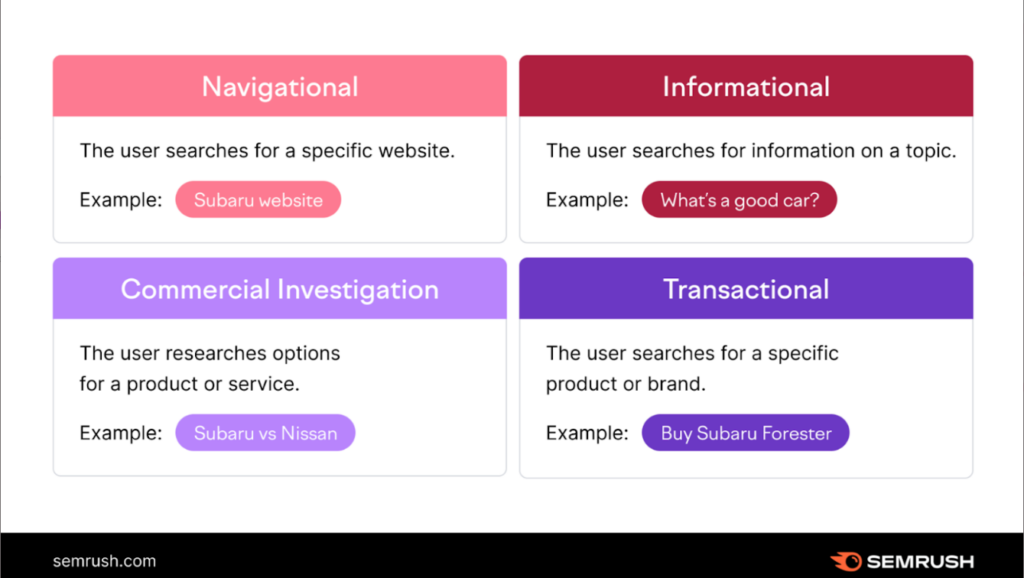
Image from Semrush
- Topic Clusters – Organize content into interconnected clusters with a central pillar page and supporting articles. This signals semantic relationships to AI models, making it easier for them to understand context and intent.
- Contextual Relevance – Use natural language, synonyms, and related topics to ensure content aligns with how users phrase questions in conversational speech.
3. Entity-Based Optimization
Entity-based optimization is a new 2026 content search strategy that involves establishing a brand, person, or concept as a recognized, credible entity within search engine Knowledge Graphs. This strategy clarifies meaning, enabling AI systems to place a page within their semantic networks accurately.
The primary principle of entity-based optimization is to treat a website as a node in a global network:
- Define Identity – Identify specific topics and concepts addressed in the content.
- Schema Synergy – Implement structured data to explicitly define entities, their attributes, and their relationships for AI-powered search systems.
- Semantic Content Strategy – Include related concepts, synonyms, and subtopics that reinforce entity context.
- Internal Linking Network – Create a Knowledge Graph on the website by linking related entities to build topical authority.
- Build Entity Reputation – Maintain consistency across the web by establishing authoritative mentions in relevant, high-quality sources.
4. Structured Data and Technical SEO
In the AI-first SEO era, websites are no longer just for human readers; they are also data sources for generative AI models. For AI systems to extract and attribute information, a site must have structured, semantic data. In fact, sites with proper schema markup help content stand out in AI Overviews while reinforcing organic performance.
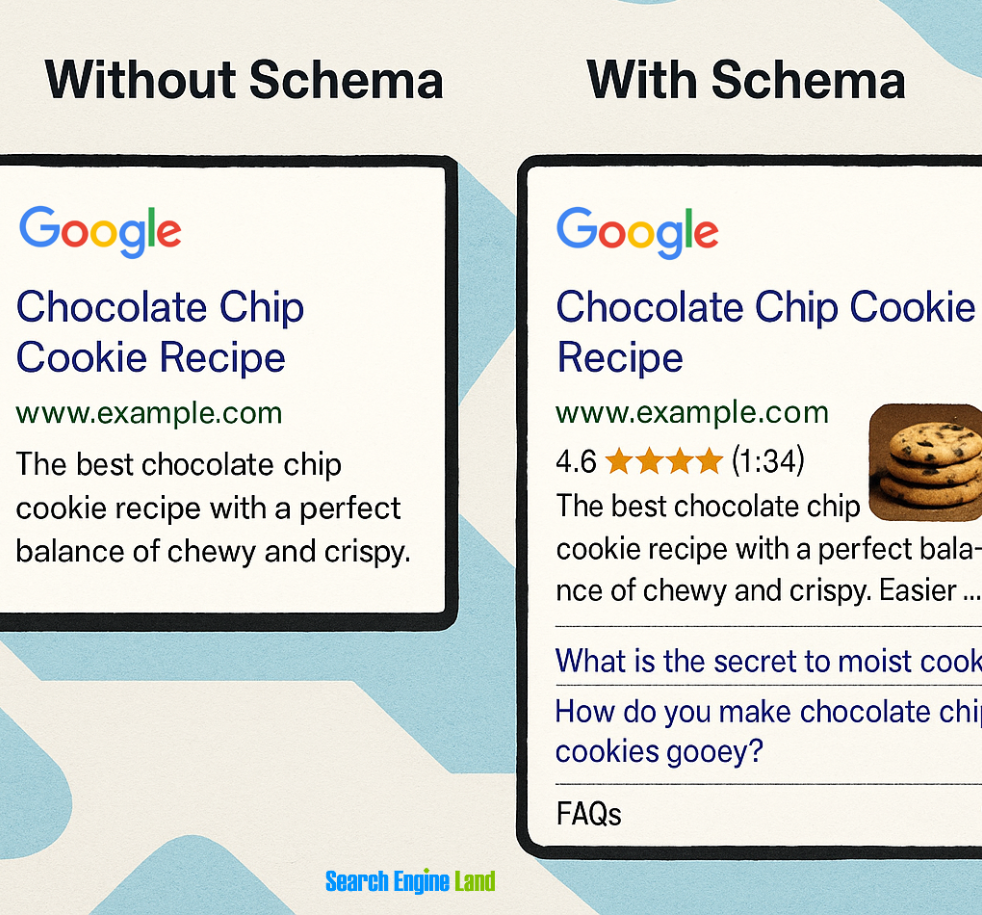
Image from Search Engine Land
To ensure AI crawlers interpret and extract information:
- Contextual Schemas – Add FAQ, HowTo, and QAPage markup to provide direct answer formats.
- Machine-Readable Citations – Ensure all structured data is in JSON-LD format, as this is the easiest for AI to parse.
- LLMS.txt – Provides a simplified, text-only directory specifically for AI models to understand site structure.
- Crawl Management – Use clean robots.txt and up-to-date XML sitemaps.
- Canonicalization – Consistently use canonical tags to prevent entity fragmentation and consolidate authority signals across similar pages.
5. Authority and Trust Signals
On top of semantic relevance, AI-first SEO depends on credibility. Generative models assess content not just by what it says, but by who says it and why it should be trusted. Building E-E-A-T (Experience, Expertise, Authoritativeness, and Trustworthiness) is essential for visibility in AI-driven search.
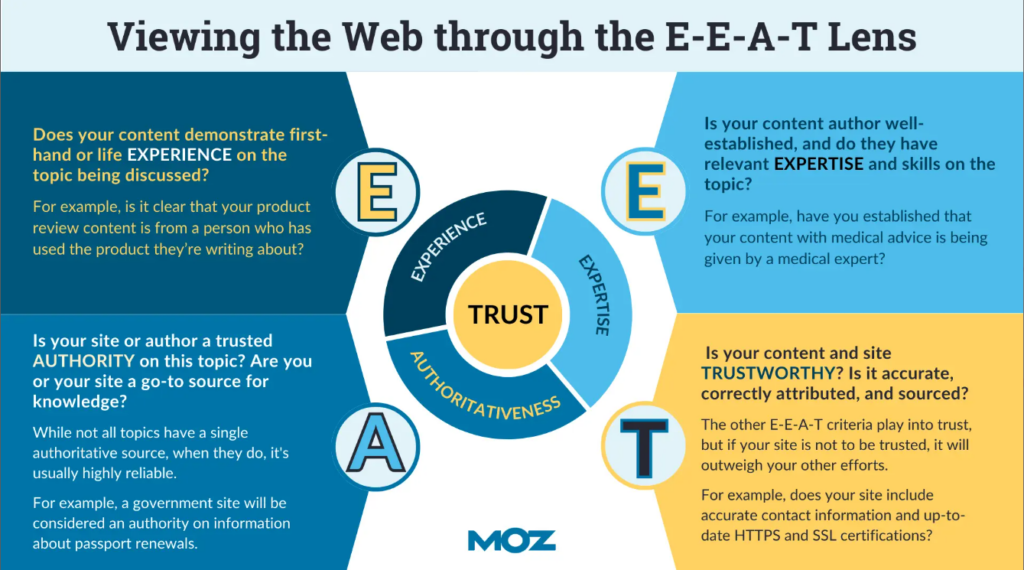
Image from Moz
In fact, 76.10% of AI Overview citations are from the top 10 traditional search results, meaning high-ranking sites with established E-E-A-T are heavily favored in AI answers. Below are ways to build stronger credibility for AI visibility:
- Citations and References – Link to reputable studies, industry reports, and authoritative sources.
- Brand Mentions – Encourage organic mentions across news sites, blogs, and social media. Even unlinked mentions strengthen entity recognition and authority signals.
- Reputable Backlinks – Acquire backlinks from trusted domains within the industry. High-quality backlinks remain one of the largest authority indicators for traditional and AI search.
- Author Profiles – Highlight credentials, experience, and expertise of content creators. Transparent author bios reinforce trustworthiness and align with E-E-A-T standards.
Be the Answer AI Cites With DMP
The 2026 SEO strategy is leaving behind keyword stuffing for good and focusing more on becoming the trusted source that generative models rely on. The AI-first SEO playbook is all about aligning your strategy with semantics, authority, and intent, positioning your brand to be the answer users are searching for.
Become part of the new AI search landscape and partner with Digital Marketing Philippines (DMP), a trusted and reliable marketing agency Philippines. With over a decade of experience in providing comprehensive digital marketing solutions, our expert team can help your business achieve the ultimate omnichannel presence in traditional search, AI platforms, and beyond.
Future-proof your strategy for AI – contact us to optimize beyond the algorithm today.
Sources:
https://searchengineland.com/local-seo-ai-search-462083
https://www.searchenginejournal.com/how-ai-is-redefining-search-and-what-leaders-must-do-now/554927
https://neilpatel.com/blog/ai-seo
https://searchengineland.com/entity-seo-guide-395264

Jomer B. Gregorio is a well-rounded expert when it comes digital marketing. Jomer is also known as a semantic SEO evangelist and practitioner. Check out our Digital Marketing Services today and let us help you in achieving positive and profitable results for your business.