
The rapid growth of content creation in the early 2020s led to a predictable, albeit messy, outcome: a digital landscape flooded with generic, AI-generated content. While AI tools enabled quick, mass-produced content, search engines and users alike were fatigued by low-quality material by 2024.
Fortunately, in 2026, the focus has shifted back toward quality, not through slower manual writing, but through the adoption of smart SEO briefs. Modern SEO briefs are evolving into more strategic documents that incorporate data insights, brand guidelines, and AI-assisted inputs.
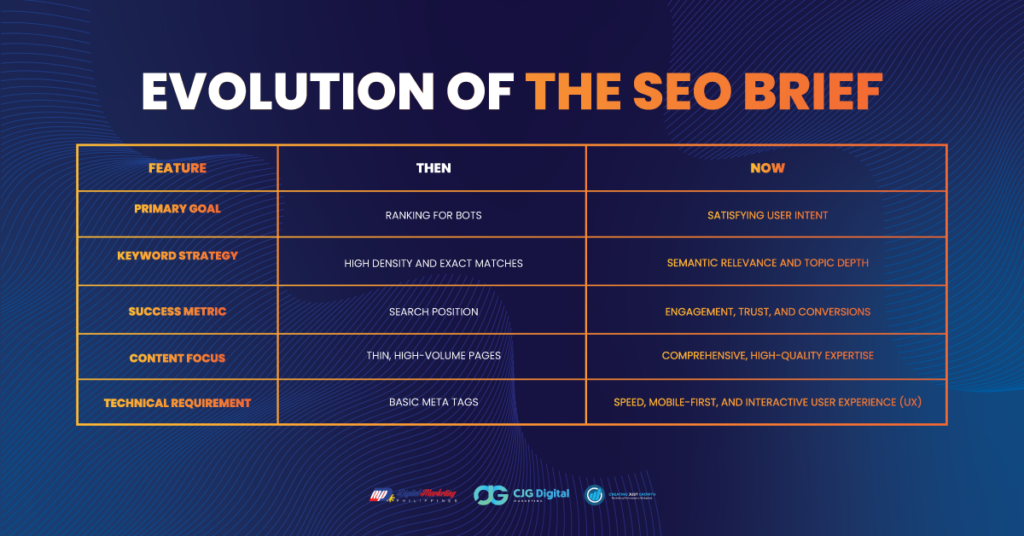
The Evolution of the SEO Brief: Then vs Now
An SEO brief, often referred to as a content brief, is a document outlining instructions for creating content designed to perform well on search engines. It maps out the target keyword, search intent, competitor analysis, content structure, and expected word count.
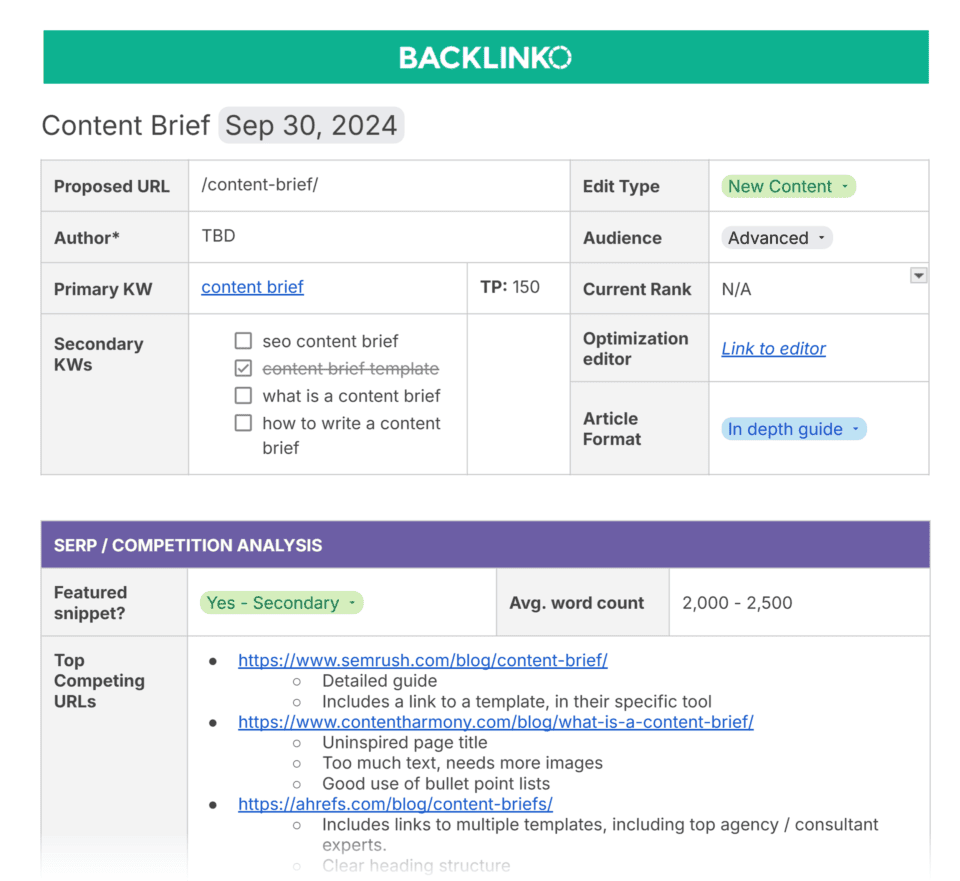
Image from Backlinko
Like search algorithms, SEO briefs evolved over time, shifting from a keyword-focused checklist to a detailed set of instructions designed to produce content that satisfies user intent.
Then: The Technical Checklist
In the early days, SEO was the wild west, where ranking was a matter of volume over value. A brief was essentially a technical list that involved:
- Keyword Stuffing – Briefs focused on keyword density, which led to repetitive and unnatural content written mainly for search engines.
- Exact-Match Focus – Writers were instructed to use specific phrases exactly as searched, even when the phrasing felt awkward or incorrect.
- Quantity Over Quality – The goal was high output and large volumes of backlinks, regardless of whether the content was useful to the reader.
The aim was to manipulate the algorithm into ranking a page, often at the expense of readability. If the content was thin but the meta tags were optimized, it was usually considered a success.
Now: Strategic Intent Document
Modern briefs emphasize search experience optimization (SEO), which means treating search as a bridge to delivering a clear and helpful answer. Instead of requesting a standard 1,000-word article, briefs now call for a more in-depth approach:
- User Intent Mapping – On top of providing relevant keywords, briefs define why someone is searching and what problem the content should address.
- E-E-A-T and Trust – Briefs now expect writers to demonstrate Experience, Expertise, Authoritativeness, and Trustworthiness, often including requirements for original research or expert input.
- Semantic Topic Ecosystems – Rather than a single keyword, smart briefs focus on topic clusters, which involve grouping related concepts to signal deep topical relevance to search engines like Google.
- AI Adaptability – Smart briefs prioritize “human-first” content that can’t easily be replicated by AI, focusing on unique perspectives to survive zero-click search environments.
Core Components of a Smart SEO Brief
Smart SEO briefs outline the key elements needed to create effective SEO content. These typically include the following components:
- Target Keywords – The primary keyword to rank for, plus related secondary (semantic) keywords that ensure the content is relevant.
- Search Intent Alignment – A clear definition of what the user wants to achieve to ensure the content format matches that need.
- Detailed Content Outline – A structured set of headings that covers the subtopics required to satisfy the user based on an analysis of top-ranking pages.
- Competitor Insights and Gaps – A summary of what top-ranking content already does well and what they miss to create a unique angle. This is also known as information gain.
- Target Audience – A brief description of the target audience’s demographics, challenges, and knowledge level.
- Internal and External Links – Specific links to include for building site authority and increasing credibility by referencing trusted sources.
- Actionable Call to Action (CTA) – A clear, targeted next step that guides the reader toward engagement or conversion.
What Makes It Smart?
Unlike traditional briefs, smart SEO briefs often leverage AI to analyze competitors’ search intent, keyword frequency, and topic coverage across competing content. These documents then identify where to add unique value, such as original data or expert insights, and act as a structured guide to help writers avoid spending too much time on irrelevant points.
Moreover, smart SEO briefs include a structure tailored to AI Overviews, such as directly answering questions at the start of each H2 section.
How Smart Briefs are Redefining the Mechanics of Scale
With AI-driven traffic surging up to 527%, smart briefs that focus on semantic SEO, topical authority, and E-E-A-T rather than keyword density have become essential in maintaining visibility in 2026.
1. Eliminating the Feedback Loop Bottleneck
Traditionally, scaling content was hindered by the friction between SEO strategists and creative writers. In 2026, smart briefs will leverage synchronous optimization using real-time natural language processing (NLP), giving writers immediate feedback as they work. This parallel layout reduces revision cycles and shortens the time spent on manual audits.
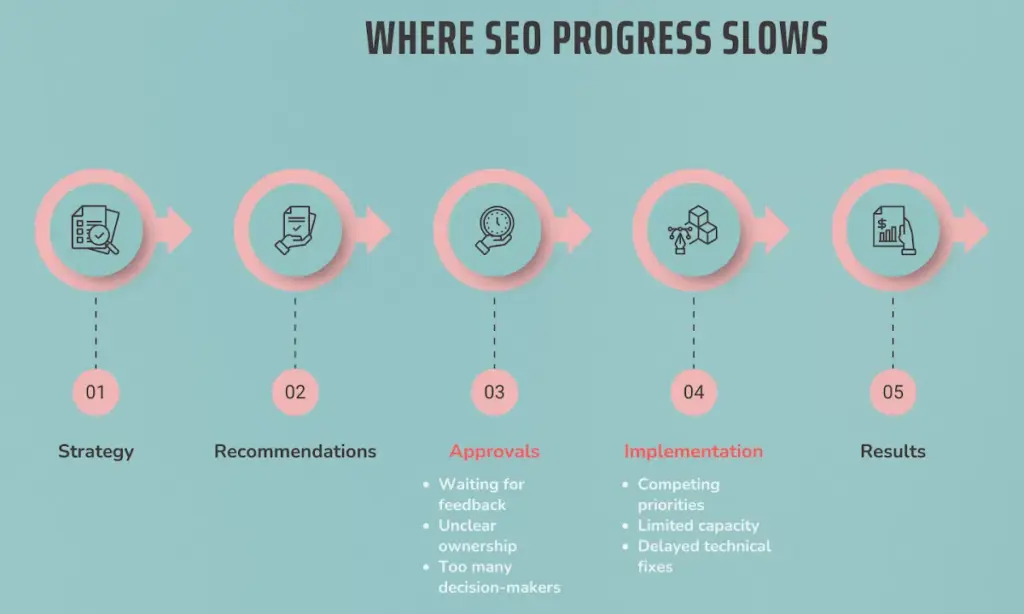
Image from Search Engine Land
2. Building Automated Topical Authority
Search engines now prioritize entity-based authority over simple keywords. Smart SEO briefs power scalability by automatically mapping out topic clusters.
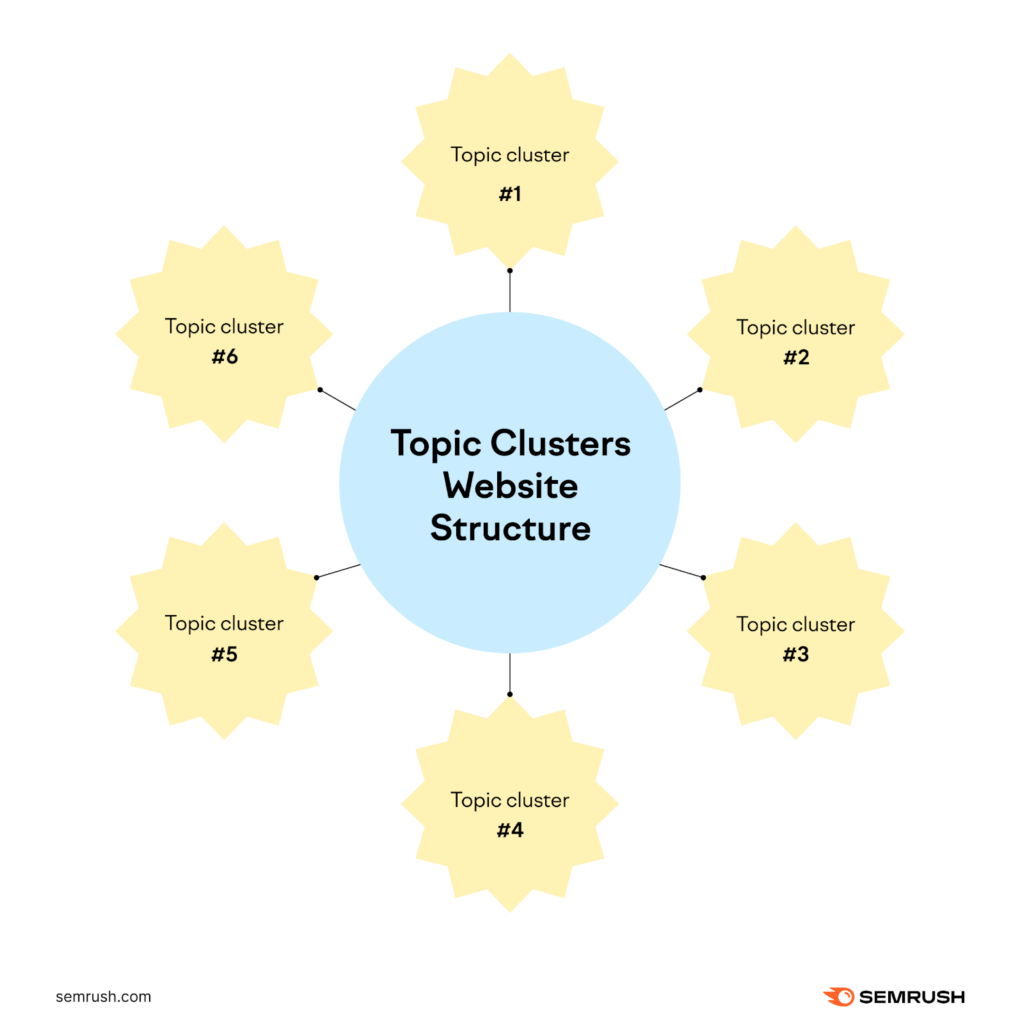
Image from Semrush
Instead of treating each article as a standalone piece, briefs analyze competing content to identify missing angles and underdeveloped subtopics. This will help identify relevant internal links and supporting subtopics that are needed to turn a single blog post into a pillar of authority, allowing brands to dominate entire niches systematically.
3. Writing for AI-Driven Engines
According to SimilarWeb, 80% of searches end with zero clicks, which means content must be machine-readable to be cited by AI systems.
Smart SEO briefs act as a structural blueprint by enforcing schema-ready hierarchies and inverted pyramid formatting, making key information easier for AI search engines to interpret.
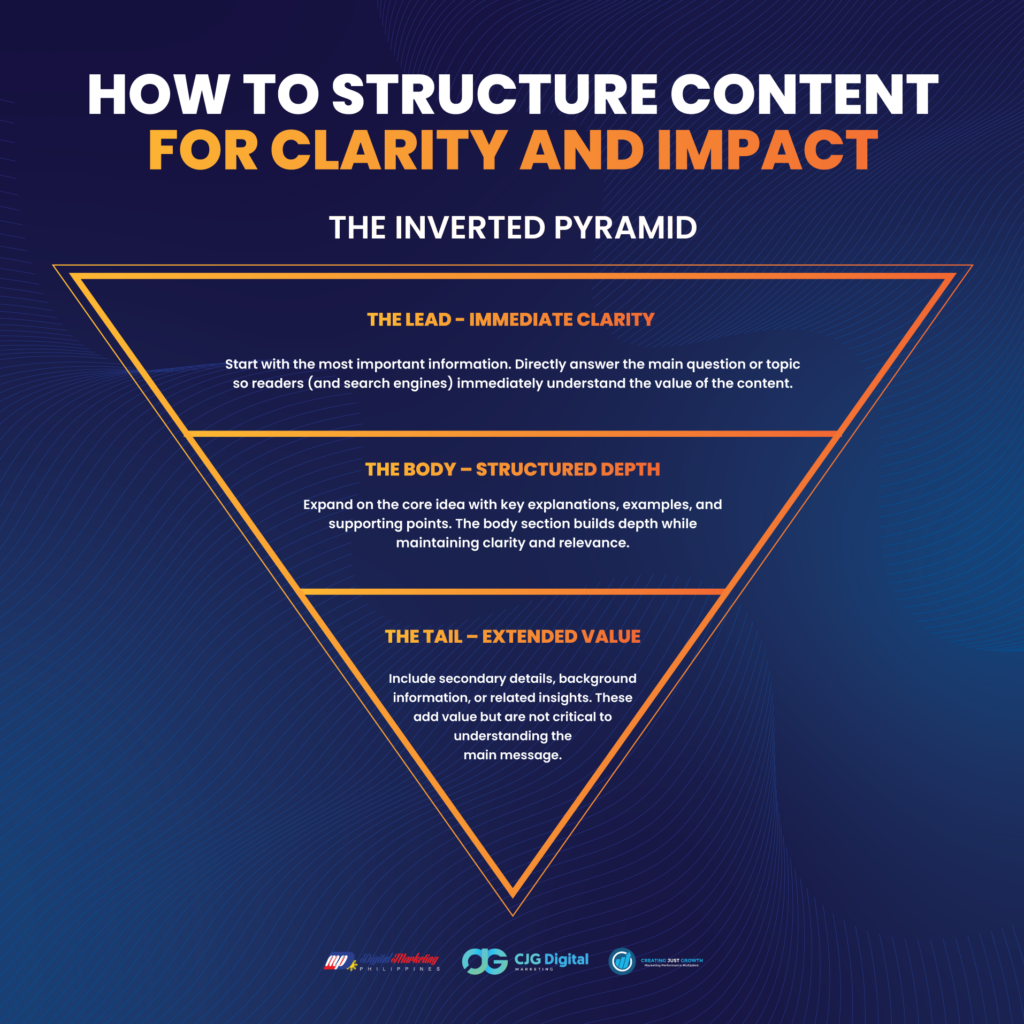
Additionally, smart briefs will adopt generative engine optimization (GEO) tactics, which include:
- Explicitly defining terms in the first 50 words of a section.
- Requiring tables, bulleted lists for specs, and a frequently-asked questions (FAQ) schema built directly into the H2 headers.
- Instructions to include unique data points or expert quotes to ensure answer eligibility for large language models (LLMs).
4. Data-Driven Creativity Through Trend Velocity
Scalability in 2026 is also about timing. Modern smart briefs now integrate with predictive trend analytics to identify breakout topics before they peak, allowing content teams to batch-produce assets for upcoming market shifts. This proactive approach helps brands prepare content ahead of rising trends—the brand already has a library of high-quality, optimized content ready to capture its share of the traffic.
5. The Human-in-the-Loop Architect
Perhaps the most significant impact of smart SEO briefs is changing the role of the content professional. The best SEO agency in the Philippines will create a new workflow where the writer vs. AI debate turns into the content architect structure:
- The Architect (Human) – Uses smart SEO briefing tools to set the strategy, select entities, and define the unique expert angle.
- The Builder (AI) – Produces a smart briefing as a rigid skeleton to generate a high-fidelity first draft that adheres to all SEO and brand requirements.
- The Polisher (Human) – Reviews the draft for emotional resonance, fact-checks citations, and adds the final touch of human nuance.
This hybrid workflow allows a single editor to oversee 10 times the volume they could years ago without a drop in quality.
Master the Art of Scalable SEO With DMP
The evolution of SEO content briefs reflects the balance between automation and human insight. As Google places increased focus on user intent and human ingenuity, smart content briefs can help brands produce high-volume content without sacrificing quality.
Ready to turn your content into a high-performance sales engine? At Digital Marketing Philippines (DMP), we build scalable content strategies backed by the latest 2026 SEO standards. Let our experts help you dominate the first page and convert targeted prospects into loyal customers.
Contact us to start generating the revenue your business deserves.
References:
https://www.smartinsights.com/about
https://searchengineland.com/guide/content-brief
https://www.semrush.com/blog/seo-content-brief

Jomer B. Gregorio is a well-rounded expert when it comes digital marketing. Jomer is also known as a semantic SEO evangelist and practitioner. Check out our Digital Marketing Services today and let us help you in achieving positive and profitable results for your business.