
Google’s March 2026 Spam Update rolled out over an unusually short period, completing within roughly a day between March 24 and March 25, 2026—making it one of the fastest observed spam update rollouts in recent years. While the update aligned with existing spam policies, its speed indicates improvements in Google’s Automated enforcement capabilities via SpamBrain AI Detection.
The March 2026 Spam Update Timeline
In March 2026, Google released multiple updates within a short span, including two separate algorithm adjustments. This resulted in what may be the highest search engine results page (SERP) volatility so far this year, with SEMrush volatility score peaking at a whopping 9.5/10.
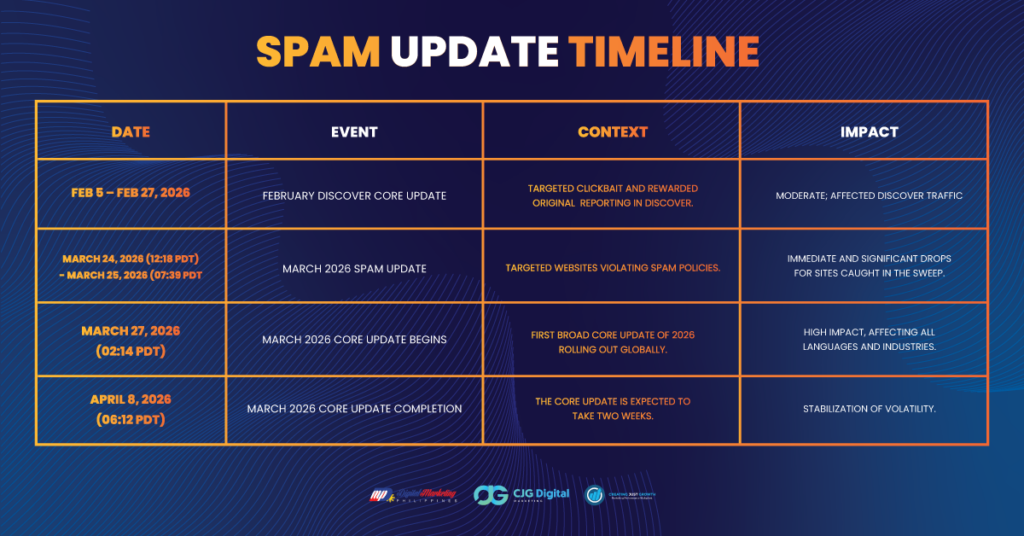
While Google’s March 2026 Spam Update had high expectations, the rollout wrapped up within the day. Historically, spam updates have taken anywhere from 7 to 27 days to permeate the global index fully. This sub-20-hour window suggests that Google’s AI-based prevention system, SpamBrain, had already pre-identified target domains and will penalize them within hours.
What Changed in Google’s March 2026 Spam Update
Marketers were surprised to find search traffic in a tailspin on March 26. The recent spam update hit the search landscape quickly, leaving site owners little time to react during the rollout. Unlike the expansive March 2024 update that introduced a new set of rules, this update was about enforcing existing spam policies more efficiently.
The Main Targets
Industry analysis from major search engine optimization (SEO) experts identified specific focal points in the March 2026 Spam Update:
- Scaled Content Abuse – This refers to generating large volumes of low-quality, unoriginal, or AI-generated content primarily to influence search rankings. Google is getting much faster at spotting “AI slop,” causing 60% to 80% of penalized sites to suffer from significant ranking drops.
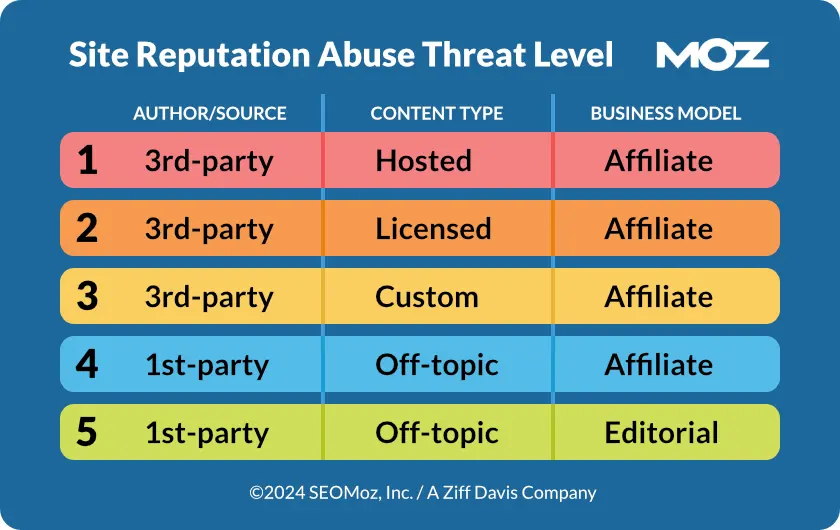
Image from Moz
- Expired Domain Abuse – Using an old, high-authority domain to publish unrelated content is a major target for this algorithm update. Google considers this a violation of spam policies and will result in major loss of search visibility.
- Thin and Scraped Content – If a page rehashes what’s already in the top 3 results without adding a unique perspective or original data, SpamBrain is now much more likely to filter it out.
In general, this update was not a discovery phase. Rather, this was the execution of a pre- identified set of violations and a strike against automated, low-value content. The focus has greater emphasis towards enhanced Experience, Expertise, Authoritativeness, and Trustworthiness (E-E-A-T) principles, particularly in YMYL (Your Money or Your Life) areas.
What Was Not Targeted (For Now)
Surprisingly, this update was relatively narrow in scope. Several major areas typically associated with spam updates were explicitly excluded from this specific rollout:
- Link Spam – Google March 2026 Spam Update did not focus on backlink manipulation.
- Site Reputation Abuse – The practice of hosting third-party content on high-authority domains referred to as Parasite SEO was not the focus here, though it remains against policy.
Google does not isolate spam tactics strictly by update type, so these areas may still be addressed continuously or in future updates.
How to Diagnose the Impact
Because this update was followed just 40 hours later by the March Core 2026 Update, diagnosing the traffic drop requires precise timing and a deep analytical understanding of contributing factors.
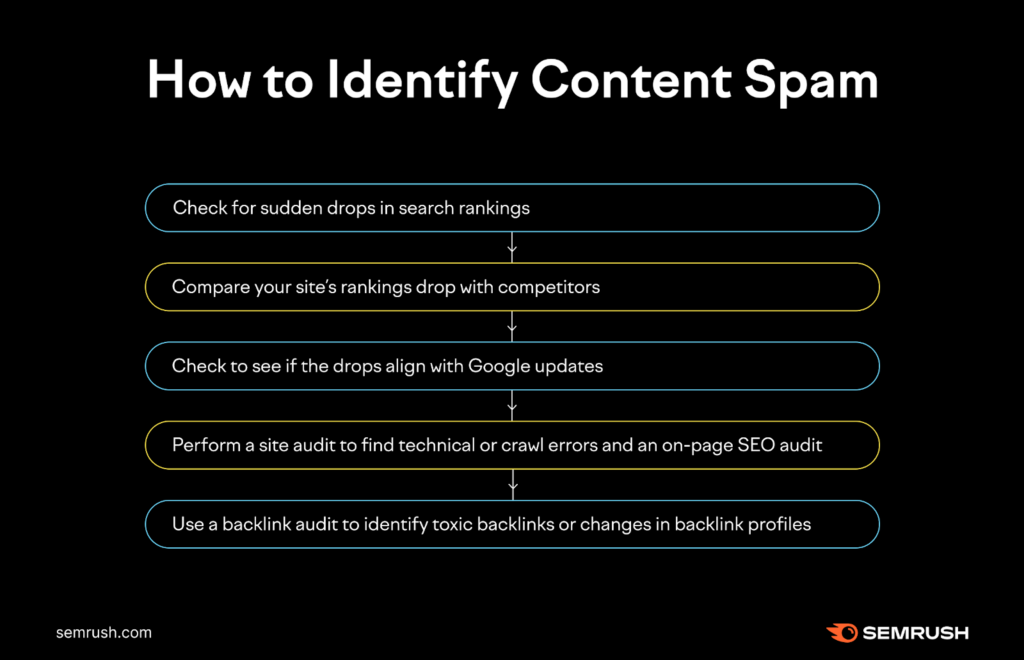
Image from SEMrush
Step 1: Stay Calm
Before making any adjustments, be sure to confirm whether the traffic changes were caused by the Spam or Core Update. Since both changes were released closely, it is vital to observe the timelines and which pages were affected.
Step 2: Check the Window
Isolate performance data for March 24-25, 2026, in Google Search Console and look for the following signs:
- Loss of impressions in Google Search Console (GSC)
- Disappearing keywords
- Sudden drop in rankings
- Traffic decline within 48 hours
If these signals appeared on March 24–25, they are more likely tied to the spam update. Later fluctuations may be associated with the core update.
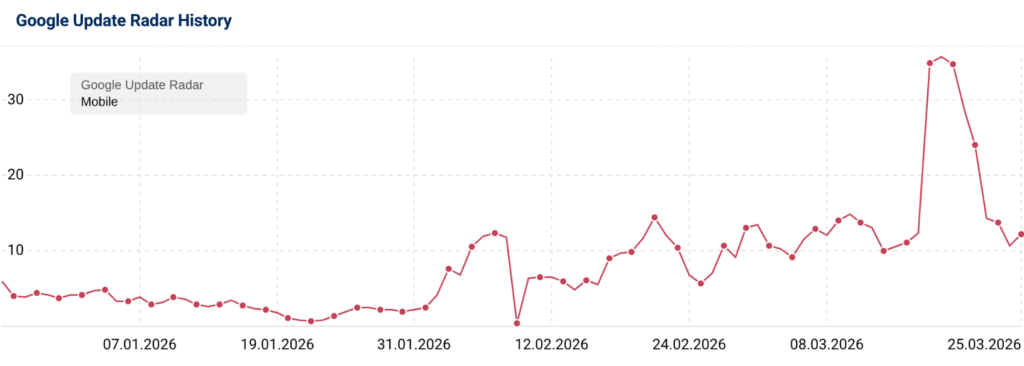
Image from Sistrix
Step 3: Manual Actions
Check the Manual Actions tab in Google Search Console. While most effects were algorithmic, more severe violations may have triggered a manual penalty that requires a formal reconsideration request.
What to Do Next
Recovery from a spam update takes time. Websites need to demonstrate sustained compliance and quality improvements before regaining trust.
1. Wait and Monitor
Avoid making sitewide changes that could hide the root cause of ranking shifts. Rankings may continue to fluctuate until mid-April, so consider:
- Observing ranking tracking tools for volatility patterns.
- Checking daily GSC note changes.
- Documenting everything, such as which pages have changed, when, and by how much.
2. Structural Cleanup
When hit with “Scaled Content”, know which pages to keep, improve, merge, or remove.
- Keep – Pages with original research, unique expert insights, and high user engagement.
- Improve – Thin pages that have potential but lack depth or information gain.
- Merge – Consolidate multiple overlapping pages into one authoritative source.
- Remove – Delete pages that lack standalone value or are purely keyword-targeted.
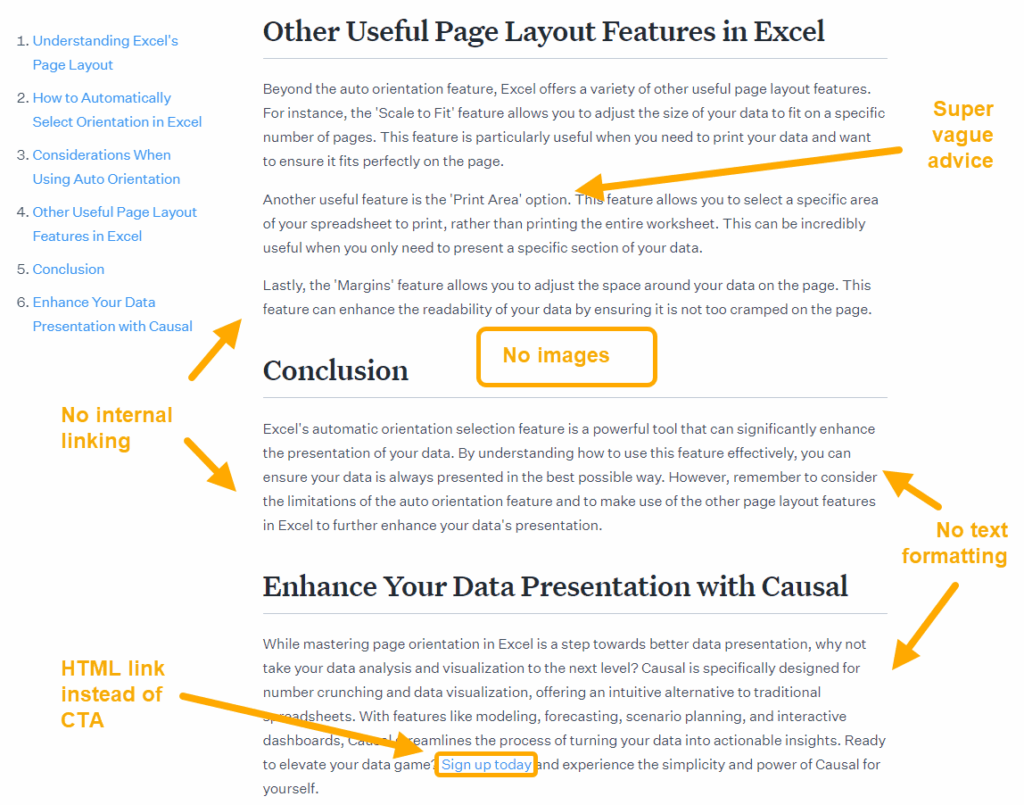
Image from Ahrefs
3. Reinforce E-E-A-T
The main objective of Google’s March 2026 Spam Update is to reduce unhelpful, “AI slop” content and boost actual human value. Since 83% of top Google search results are human-made, E-E-A-T is a valuable asset in winning the algorithm’s and user trust.
While E-E-A-T is not a direct anti-spam signal, it serves as a first line of defense against future updates. Ensuring every page has a clear, verifiable author and cites credible sources signals to Google that a site’s content is useful and trustworthy.
4. Audit Outbound and Internal Links
Remove any hidden text or manipulative redirects. Sites hosting third-party content, such as sponsored posts or guest contributions, must ensure the content is high-quality and clearly marked to avoid Site Reputation flags in the future.
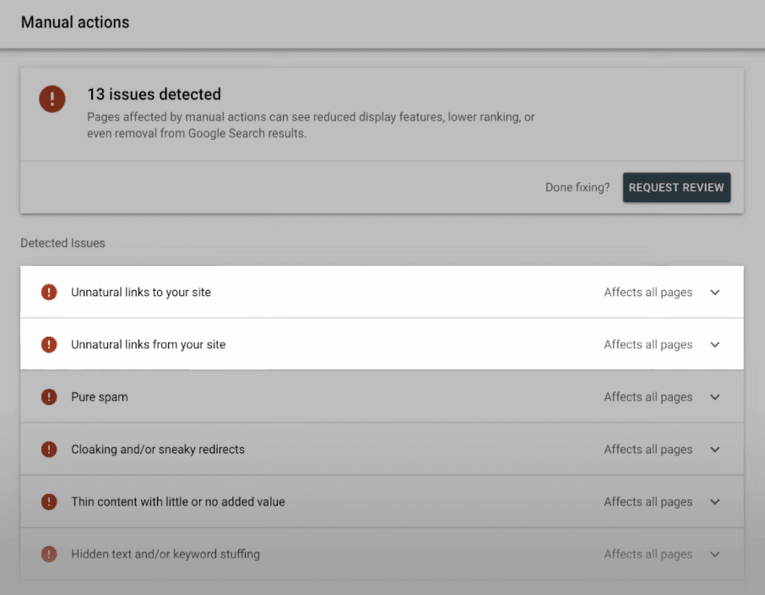
Image from Search Engine Land
5. Focus on Building Content Depth
Quality over quantity has been the principal aim of modern SEO, and Google’s March 2026 Spam Update further emphasized this need. Besides penalizing mass-produced AI-generated content, this update rewards focused topical authority over publishing on every SEO topic.
Topic clusters are an excellent way to create content with more depth. By mapping out all related subtopics under a central pillar page, brands can demonstrate high levels of expertise and reduce the risk of keyword stuffing.
Get Your Site Back on Top With DMP
With Google wasting no time delivering two algorithm updates in the same week, the era of “close enough” SEO has finally come to an end. At Digital Marketing Philippines (DMP), we are constantly monitoring all of Google’s updates across client accounts and allow for timely adjustments as search conditions change.
Our experienced team of SEO professionals ensures that every brand we work with can maintain search visibility and retain its rankings, whether addressing a standard spam fix or a major Core update.
Contact us now to create a successful SEO strategy that moves your business in the right direction.
References:
https://searchengineland.com/google-march-2026-spam-update-done-rolling-out-472455
https://www.searchenginejournal.com/google-begins-rolling-out-the-march-2026-spam-update/570428
https://developers.google.com/search/docs/appearance/spam-updates

Jomer B. Gregorio is a well-rounded expert when it comes digital marketing. Jomer is also known as a semantic SEO evangelist and practitioner. Check out our Digital Marketing Services today and let us help you in achieving positive and profitable results for your business.