
Local search used to be predictable—but not anymore. Google’s October and November 2025 SEO updates brought major changes that reshaped local search rankings and compliance requirements. Businesses relying on outdated tactics saw sudden ranking drops in map packs and organic search results.
Google introduced stricter GBP rules, deeper audits, and harsher penalties, especially for those who try to manipulate the system. These local SEO updates demand businesses follow updated Google spam policies and local ranking factors, or risk losing visibility.
October and November Google SEO Updates
Understanding these recent local SEO updates is crucial for local SEO policy compliance. Throughout October and November 2025, Google focused its updates on quality, speed, and real-world experience verification to tighten local search results.
October 2025 Update
The October update laid the groundwork for stronger enforcement across local SEO. Key changes include:
- Mobile-First Prioritization
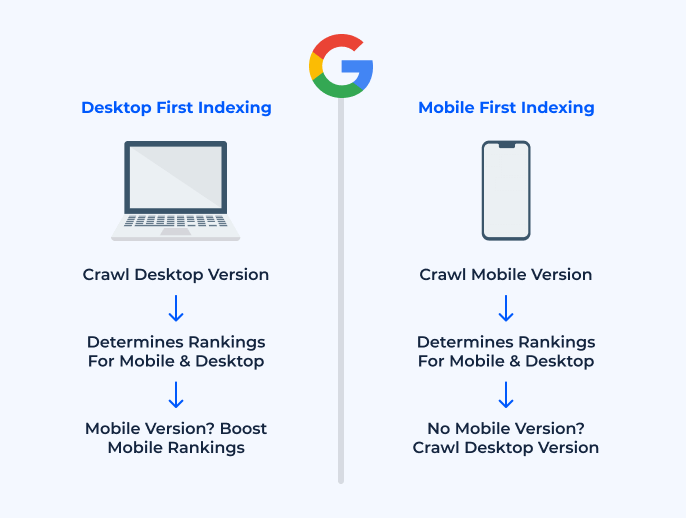
This image was taken from Sitechecker.
Google further emphasized mobile user experience, reinforcing its long-standing mobile-first prioritization ranking factor. Businesses with slow or outdated mobile pages saw immediate drops in map pack and organic search ranking.
- Stricter NAP Consistency Checks
Google now closely monitors mismatched business names, addresses, and phone numbers (NAPs) across directories. Even minor inconsistencies can lower rankings or raise trust concerns.
- AI-Driven Contextual Search
Maps and local search engine results use conversational AI to better understand intent and surface relevant, up-to-date listings. Queries like “best repair shop near me open now with quick service” get matched with listings showing strong real-world signals.
- Higher GBP Completeness Requirements

A fully complete Google Business Profile (GBP) now has a greater ranking impact. Businesses with updated photos, services, menus, attributes, and descriptions saw improved visibility. Conversely, incomplete profiles suffered declines.
- Stronger E-E-A-T Signals
Businesses, especially in Your Money or Your Life (YMYL) sectors like health, finance, and law, now face increased scrutiny. Websites now need to follow E-E-A-T (Experience, Expertise, Authoritativeness, Trustworthiness) standards through visible credentials and current and expert content to maintain trust and visibility in local search results.
November 2025 Update
Building on October’s local SEO updates, the November update targeted the map pack ranking and customer feedback authenticity. Changes included:
- Tightened Review Scrutiny
Google increased review authentication systems. Suspicious patterns, such as sudden review spikes, repeated phrasing, or reviews from out-of-area users, are now flagged or filtered. This is part of Google’s effort to penalize manipulation and push up real customer experiences.
- Freshness Factor
Google’s local search algorithm rewards businesses with a steady stream of recent, honest reviews. Older reviews have less influence on ranking.
- Map Pack Volatility
Small businesses with outdated profiles experienced ranking losses, while those with frequent updates and fresh photos saw more stable rankings.
- Actionable Review Policy
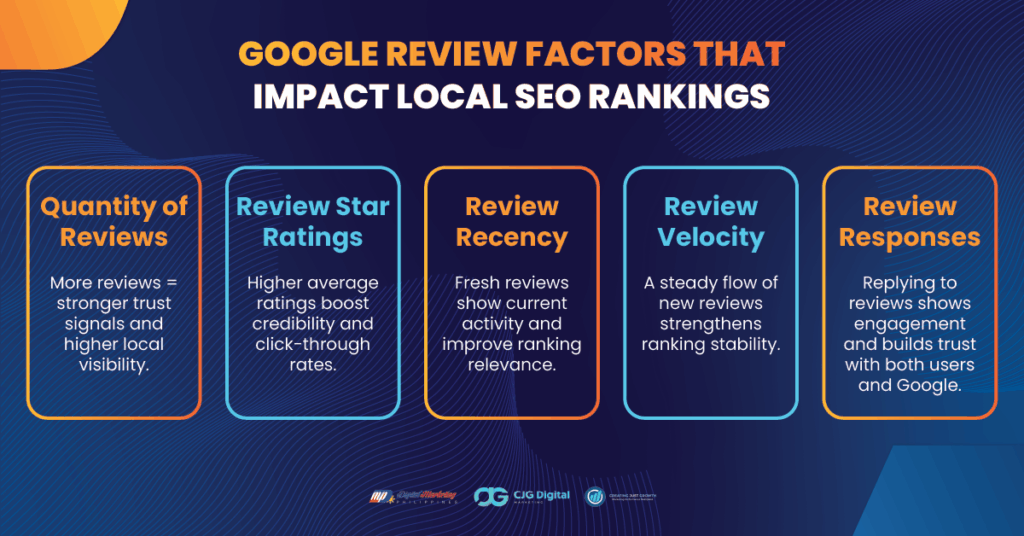
Businesses are encouraged to actively solicit real customer reviews and respond to them. Passive profiles see ranking penalties, while active engagement boosts trust signals in local algorithms.
- GBP Accuracy Required
Accuracy is now a core ranking factor under stricter Google local SEO policies. If a business’s hours, services, pricing, or descriptions are outdated by even a few months, Google may treat the listing as unreliable.
Why Google is Cracking Down on Local SEO
Recently, the local search ecosystem has become flooded with spammy listings, fake addresses, generic or low-quality content, and manipulative reviews. To fix this, Google’s local SEO updates are enforcing stricter measures against:
- thin, low-quality third-party content
- fake or rented addresses
- keyword-stuffed business names
- suspicious review behavior
- AI-generated local pages with no human expertise
These local SEO updates push the ecosystem toward authenticity. Businesses that show fresh local activity, keep their information updated, and have genuine customer interactions are rewarded. At the same time, the risk of penalties rises for those who violate Google’s updated local ranking factors or ignore the Google spam policies for local search.
Google is also putting more emphasis on real-world signals. It wants local search results to match what customers actually experience offline, rather than just what businesses present online. This change impacts small shops, multi-location brands, and anyone managing local SEO campaigns or working with a marketing agency Philippines to improve local visibility.
How Does Google Penalize Harmful or Misleading Local SEO Behaviors
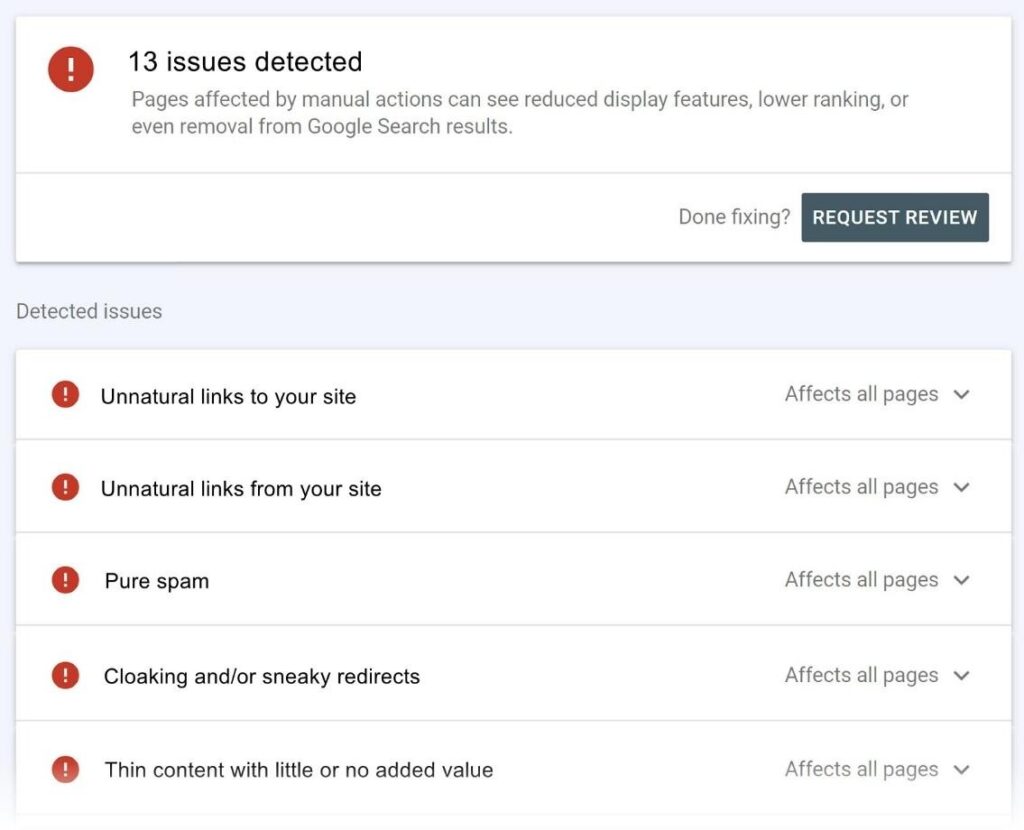
This image was taken from Semrush.
Google enforces its local SEO policies using both automated algorithms and manual human reviews. These enforcement methods aim to maintain trust and accuracy in the high-stakes landscape of local organic search and map packs.
- Algorithmic Actions are automatic penalties triggered by Google’s algorithms without human intervention. They apply swiftly to many businesses at once and often result from the detection of spammy signals, low trust, or policy violations.
- Manual Actions occur when a Google reviewer reviews and confirms violations of Google’s local SEO and spam policies. These are usually more severe and are often triggered by user or competitor reports.
Here are the penalties Google enforces for harmful or misleading local SEO behaviors:
- Ranking Drops – Rankings fall when Google detects weak trust or spammy signals. This affects both organic local search and map pack positions. A drop in ranking often happens to businesses with inconsistent NAP data or thin content pushed through a local SEO strategy focused on boosting visibility but ignoring accuracy.
- Reduced Visibility – Some listings remain active but appear less often. Google filters them out of impressions, discovery searches, and “near me” results. This usually results from misleading categories, outdated info, or review manipulation patterns.
- Profile Suspension – Google suspends a Business Profile when it detects significant policy violations, such as fake locations or repeated rule-breaking. Businesses can either be hit with a soft suspension or a hard suspension.
- Soft Profile Suspension means loss of management access. The listing stays visible on search results but cannot be updated.
- Hard Suspension removes the profile entirely from Google Search and Maps. This deletes all reviews, photos, or posts, effectively making the business invisible to local searchers. Hard suspension is common for egregious violations, such as fake addresses or review buying.
- Removal from Google’s Index – Severe or repeated violations can result in the entire listing being removed from Google’s index. This includes fraudulent businesses, deceptive practices, or networks of fake listings linked to one owner.
- Review Restrictions – Google may freeze a listing’s ability to receive new reviews. It may also delete suspicious review batches. Review restrictions usually happen after review manipulation or patterns that trigger anti-spam systems.
- Account Suspension – Businesses that use deceptive practices through multiple GBPs or misrepresent their operations risk full account suspension. This affects all managed profiles and prevents further creation of listings.
- Content Rejection – Google rejects updates that appear spam-directed, such as keyword-stuffed descriptions, AI-generated posts with no unique value, or inaccurate business details. Repeated rejection signals reduce trust and future approvals.
These penalties now align with the stricter GBP rules introduced in recent local SEO algorithm changes. Businesses attempting to resolve local SEO problems must adopt accuracy-first strategies to avoid enforcement issues.
Steps to Thrive Under Google’s Stricter Policies for Local SEO
Success under the new local SEO updates requires more than just keywords or backlinks. Businesses need to adopt a comprehensive strategy focused on accurate information, genuine customer engagement, and strict adherence to new Google local ranking factors and spam policies.
Step 1: Audit and Improve the Google Business Profile
Make sure every detail in the GBP is complete. The business name, address, and phone number must match exactly on the website and all listings. Consistency builds trust and improves rankings.
For the GBP, it is recommended to use professional photos of the location, staff, and services. Hours should also be updated instantly for holidays, unexpected closures, or seasonal shifts.
Step 2: Implement a Proactive Review Strategy
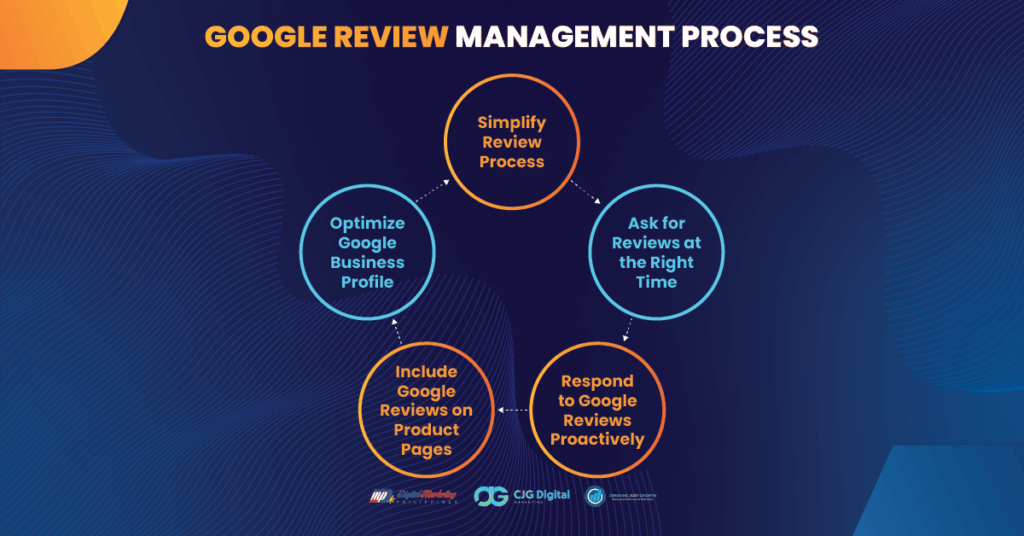
Do not wait for reviews to come on their own. Encourage the customers to leave honest feedback after every sale or service using convenient methods like short links or QR codes.
Make it a habit to respond to all reviews, thanking customers for positive comments and professionally addressing any issues. This kind of engagement boosts trust and meets the expectations of the November local SEO updates.
Step 3: Improve Local On-Page SEO
The website should support and reinforce the Google Business Profile. Focus on creating expert, locally relevant content that addresses specific issues in the area. For example, instead of generic plumbing advice, provide a detailed guide on “pipe freezing issues in [location].”
Furthermore, ensure the website is mobile-friendly and fast-loading, as mobile-first design has become a crucial ranking factor in the October update.
Step 4: Embrace E-E-A-T
Show credentials, licenses, affiliations, and staff expertise clearly both on the website and GBP. This is especially important in sensitive sectors like health, finance, or law, where Google applies stricter scrutiny.
In addition, to fully employ E-E-A-T standards, businesses need to add author bios, cite trusted sources, and link to professional organizations to build authority and reduce the negative impact of local SEO algorithm changes.
Final Thoughts
Local search is shifting toward valuing authenticity, accuracy, and active engagement more than ever. Businesses that maintain updated data, encourage genuine customer reviews, and invest in expert content outperform competitors who are slow to adapt.
For businesses without internal resources or those seeking expert help with local SEO strategy development and execution, partnering with an agency that offers full internet marketing services, such as Digital Marketing Philippines (DMP), is the most effective approach.
DMP offers results-driven organic and local SEO solutions designed to improve your map pack rankings, reinforce your reputation, and safeguard your business against penalties that harm visibility and conversions.
Contact us today to discover how strategic, compliant, and future-proof local SEO can help your business dominate your local market.
FAQs
What is local SEO?
Local SEO involves optimizing a business’s online presence to appear in local search results, map packs, and Google Business Profile listings, attracting customers nearby. It focuses on location-based strategies like having accurate name, address, and phone number (NAP) data, collecting reviews, and creating localized content.
What is the difference between local SEO and regular SEO?
Regular SEO targets broad, often national or global searches, while local SEO focuses on location-specific queries and visibility within map packs.
How effective is local SEO?
Local SEO is highly effective in driving traffic and sales within a specific geographic area. Businesses that implement local SEO often experience measurable growth in calls, website clicks, and physical store visits.
How often should I update my Google Business Profile?
Google Business Profiles should be updated at least monthly or whenever business details change, such as hours, services, or photos. Keeping profiles accurate and fresh helps improve rankings as it aligns with Google’s local ranking factors.
References
https://localdominator.co/seo-news/seo-news-roundup-october-27-to-november-2-2025/
https://searchengineland.com/library/seo/local
https://blog.storefries.com/improve-local-seo-2025-updates/
https://agencyanalytics.com/blog/local-seo-reports
https://www.semrush.com/blog/what-is-local-seo
https://superprompt.com/blog/google-ai-algorithm-update-october-2025-what-changed-recovery
https://support.google.com/business/answer/14114287

Jomer B. Gregorio is a well-rounded expert when it comes digital marketing. Jomer is also known as a semantic SEO evangelist and practitioner. Check out our Digital Marketing Services today and let us help you in achieving positive and profitable results for your business.