
Every search engine optimization (SEO) professional knows the sinking feeling of logging into a rank tracker and seeing a screen full of red down arrows. Typically, SEOs would start troubleshooting immediately, including investigating an indexed staging site, checking for recent core updates, or looking for accidental technical errors.
But for teams experiencing unstable SEO ranking swings, the explanation might be far more troubling than a faulty site migration. Recent developments in late 2026 show that Google is heavily filtering automatic bot traffic, causing third-party SEO tracking tools like Ahrefs and Semrush to receive altered or “poisoned” search engine results pages (SERPs).
Understanding the Google “Poisoned” Results Crisis
The issue first surfaced in mid-September 2026, when SEO veteran Barry Schwartz reported that Google Search rank and position tracking was becoming highly erratic. By late October, the situation escalated into an industry-wide data anomaly, with major SEO platforms like Semrush, Ahrefs, and AccuRanker officially confirming that automated data collectors were receiving “junk” or “poisoned” search results from Google.
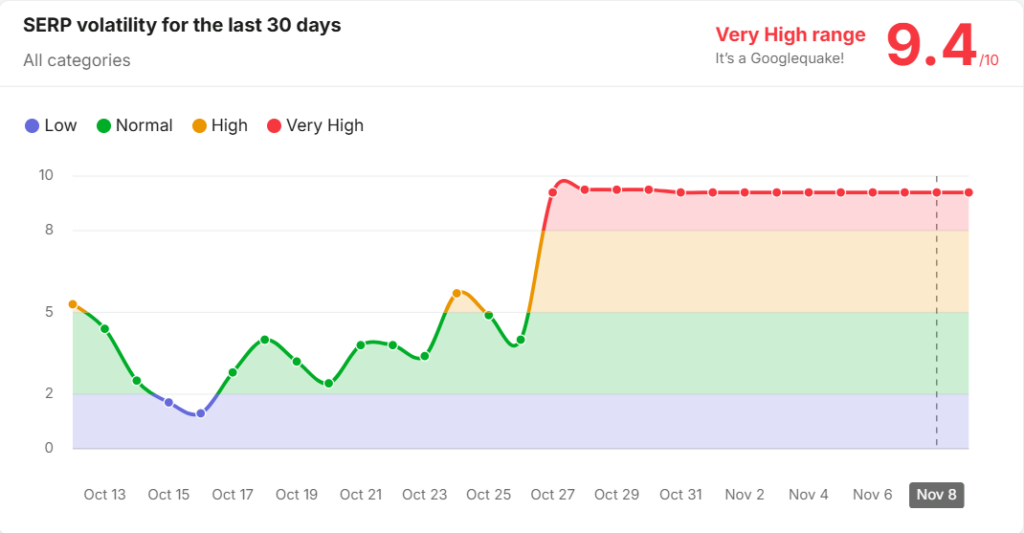
Image from Semrush
What Does a Poisoned SERP Look Like?
A “poisoned” or inaccurate SERP loads successfully and appears completely legitimate. However, the data presented may be incorrect or skewed, and manifests in two distinct ways:
1. Total Domain Swapping
The page looks functional, but most established websites that usually rank for the keyword disappear from the results. Instead, replaced by URLs that have little or no relevance to the search query.
2. Contextual Incongruity
The top results may appear normal, but lower positions might display bizarre, loosely matched sites. According to the Semrush team, one Brazilian search for a baby stroller returned a dental equipment supply page. The apparent connection was the Portuguese word “carrinho,” which can refer to both a stroller and a small cart.
What the Numbers are Saying
This incident has largely affected the digital marketing landscape, with several industry studies showing the sheer scale of the disruption:
- Ahrefs estimated that 5% to 20% of all tracked SERPs have been impacted, depending on the specific data provider.
- Nozzle analyzed 27.5 million search pages and concluded that roughly 8% of SERPs were poisoned.
- Search Engine Journal reported that volatile anomalies peaked heavily around late September, with poisoned SERPs making up 5% to 11% of daily tracked pages throughout October.
- AccuRanker discovered that on October 24 alone, up to 40% of first-page desktop queries showed signs of suspect data collection spoofing before mitigation filters were applied.
Why is Google Doing This?
So far, Google has not yet released an official statement regarding the poisoned SERPs. However, some digital marketing experts suspect that the unusual results may be part of a defensive strategy against aggressive data harvesting. To prevent massive artificial intelligence (AI) systems and scrapers from stealing web data to train large language models (LLMs), Google may have manipulated the code served to robots.
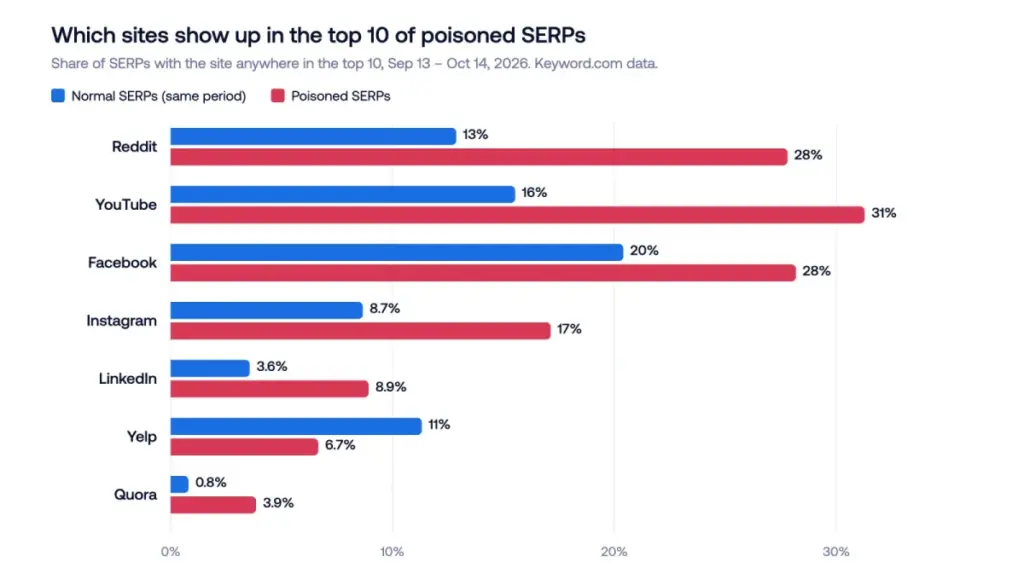
Image from Keyword.com
By intentional design, the junk results trigger artificial volatility that dropped standard site retention from an average of 88.5% to just 20.7% for automated tracking agents. Interestingly, these poisoned SERPs also often prioritize heavy user-generated content platforms, including Facebook and Quora, while suppressing AI Overviews.
Step-by-Step Checklist: What to Look for When Ranking Swings
Since ranking tools may temporarily report inaccurate data, digital marketers should avoid treating every reported SEO rank tracking fluctuation as an actual change in search visibility. The following checklist can help distinguish temporary data distortion from a legitimate visibility issue:
1. Audit Real-User Traffic Metrics First
When rank trackers report a sudden drop, SEOs should immediately validate with the actual web analytics platform, particularly Google Analytics 4, and server logs.
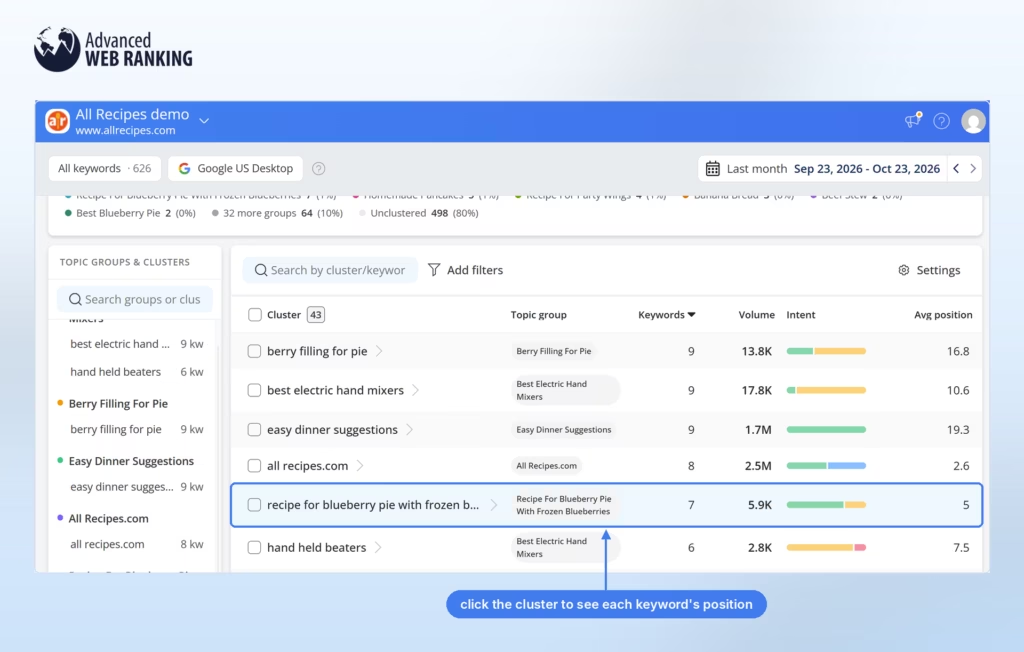
Image from Advanced Web Ranking
Consider checking these key performance indicators (KPIs):
- Organic Sessions – If the tracking software claims a core keyword dropped from position #2 to position #75, but real-time organic visits to that keyword’s landing page remain steady week-by-week, this might be a poisoned result.
- Conversion Actions – Lead form submissions, phone inquiries, and completed checkouts provide additional evidence of how visitors interact with the website. If these conversion metrics are healthy, live visibility is likely intact.
2. Cross-Reference with Google Search Console (GSC)
Google Search Console (GSC) is one of the best tools for monitoring online visibility rankings amidst swings. Unlike third-party rank trackers that rely on programmatic emulation, GSC reports on the actual interactions of live search users.
Consider taking the following steps to cross-check GSC data with ranking trackers:
- Pull the Performance report for the specific pages and queries showing volatility.
- Look for drops in Total Clicks and Impressions.
- Keep in mind that GSC data usually operates on a 24- to 48-hour data-processing delay. If the tracking swing happened in the morning, GSC may be unable to display it yet. Regardless, GSC can still help verify performance trends from previous days.
3. Perform a Clean, Manual Search Verification
Searching a keyword into a personal browser tab is ineffective, as history, location, cookies, and Google account activity may produce personalized results. Instead, perform the following steps:
- Open a clean, incognito or private browsing window.
- Use localized testing parameters, such as changing region settings or leveraging proxy testers or standard developer tools to spoof geo-coordinates.
- Check if the site is present. If the website is physically visible in its standard position but the software says it vanished, the rank tracker’s IP node may have been fed a poisoned SERP page.
4. Examine the Competitor Landscape in the Report
Open the detailed SERP history or HTML snapshot inside the rank tracker. Look at who is suddenly outranking the brand and whether they are natural commercial competitors. If the SERP is filled with totally random storefronts from another country, massive forum threads, or unrelated social pages, the software has scraped an untrusted, poisoned variant of the page.
5. Verify the Scope of the Volatility
Before trying any attempts at troubleshooting, SEOs must check if the drop is universal across all devices, locations, and search engines. Consider checking if the swing is occurring exclusively on desktop or only on mobile, as most October anomalies heavily targeted desktop scraping arrays.
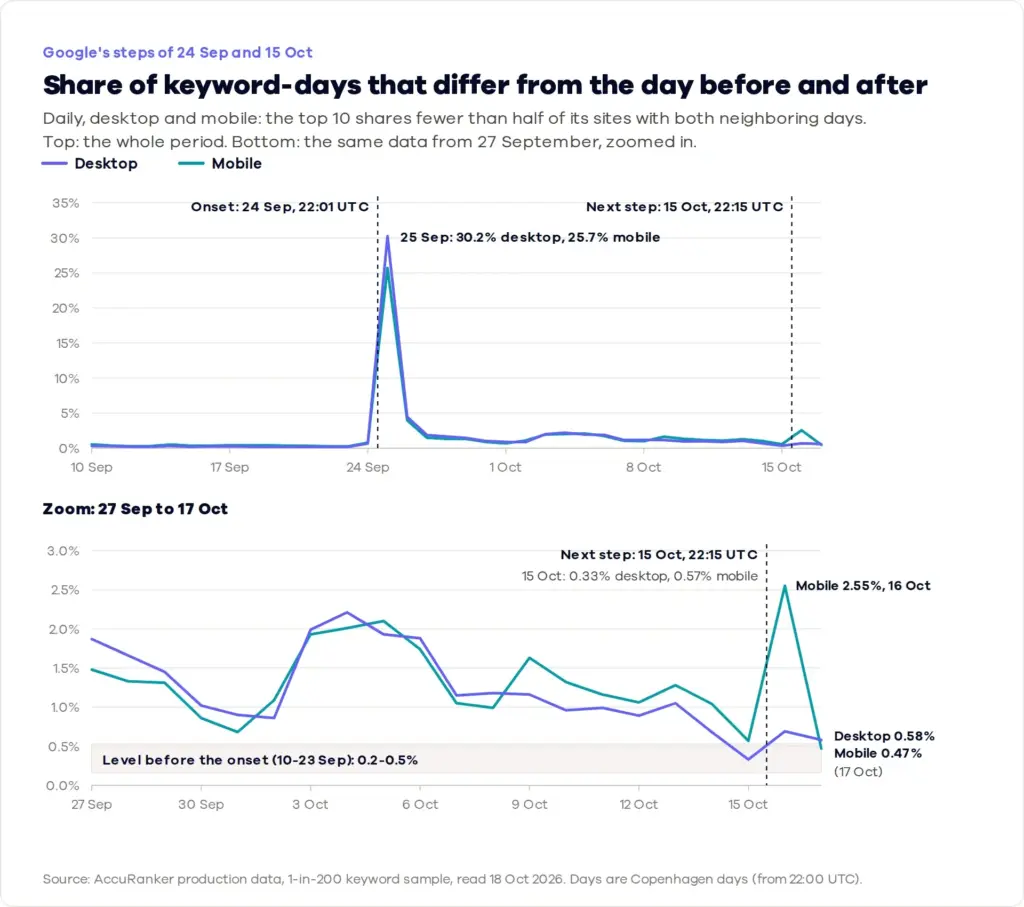
Image from Search Engine Watch
Additionally, SEO teams using more than one software can consider reviewing other tracking platforms. Since providers have introduced filtering measures to identify suspicious SERPs, ranking data may stabilize at different rates depending on the tool.
Stay Data-Confident With Digital Marketing Philippines
During situations like this, the most dangerous reaction SEOs can make is to push drastic design changes or complete content overhauls based on potentially flawed reporting data.
Third-party tracker metrics provide a general indication of search performance, but they should not be treated as definitive evidence of actual visibility. If your SEO tools seem to return off KPIs, always cross-check with first-party analytics data, internal user sessions, and the actual business bottom line.
Don’t let temporary reporting faults ruin your SEO progress. At Digital Marketing Philippines (DMP), we provide data-driven SEO and AI strategies built on a strong foundation of verified analytics and performance metrics, and transparent reporting. Our team of expert digital marketing professionals ensures your business ranks where it matters most.
Contact us today for a comprehensive, real-world audit of your organic search performance.
References:
https://searchengineland.com/semrush-confirms-poisoned-google-results-499199
https://www.semrush.com/blog/poisoned-serps
https://www.accuranker.com/blog/poisoned-serps

Jomer B. Gregorio is a well-rounded expert when it comes digital marketing. Jomer is also known as a semantic SEO evangelist and practitioner. Check out our Digital Marketing Services today and let us help you in achieving positive and profitable results for your business.