
Search behavior no longer stays inside a single box or follows a single path. People move across platforms, compare answers, check social proof, and return to search engines with specific intent. What once focused heavily on ranking pages now revolves around shaping complete digital experiences that feel consistent across touchpoints.
Search systems now evaluate more than keywords and backlinks. They also pay attention to content depth, trust indicators, usability signals, and how users engage with information. As digital discovery habits continue to change, visibility strategies have become more integrated and experience-driven. Modern search optimization reflects three “E’s” of search that influence how content gets discovered, understood, and trusted online.
Understanding the Three “E’s” of Search
The three “E’s” refer to three connected approaches that shape modern online visibility:
- Search Engine Optimization (SEO)
- Search Experience Optimization (SXO)
- Search Everywhere Optimization
Each approach supports a different stage of the customer discovery process. As a whole, they form a broader structure that reflects how people search and engage with information today.
A business that focuses on only one aspect may still attract traffic. However, weaker performance in the other areas often limits long-term growth and audience engagement. Modern search visibility now depends on how effectively all three approaches work together, especially in competitive industries where the marketing agency Philippines landscape continues to evolve rapidly.
Search Engine Optimization Still Matters
Search engine optimization (SEO) remains an important foundation for online discovery. Google, which has remained the dominant search engine for 25 years, processes 16.4 billion searches every day, and businesses still rely on organic visibility to reach people looking for products, services, information, and local solutions.
Modern SEO now extends beyond keyword placement. Search engines evaluate multiple signals before deciding how content appears and performs in search results.
Strategies That Still Work
- Build a technically sound website with strong crawlability, internal linking, mobile responsiveness, and fast page speed.
- Create content with depth, accuracy, and relevance instead of publishing thin articles written solely for rankings.
- Strengthen authority and trust signals through credible information, reliable sourcing, and clear subject expertise.
- Align content with EEAT principles, Experience, Expertise, Authoritativeness, and Trustworthiness, to support stronger content quality signals.
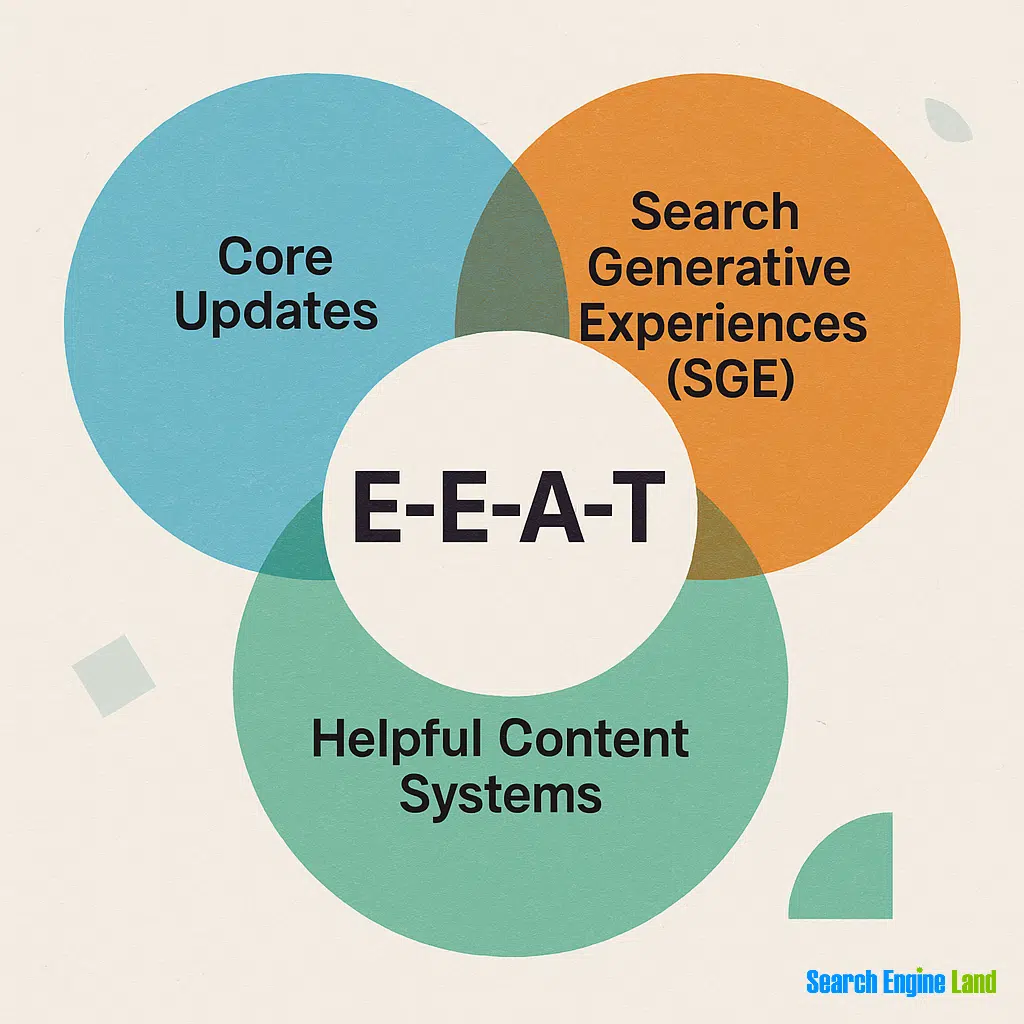
Image from Search Engine Land
Even with these strategies, SEO alone no longer covers the full customer journey, especially as AI Overviews have been observed to reduce organic click-through rates by as much as 61%. A page may rank well, but still struggle to convert visitors if the user experience feels confusing, disconnected, or difficult to navigate.
Why Search Experience Optimization Matters More Than Rankings
A high ranking means very little if visitors leave immediately right after landing on a website. Modern search visibility clicks alone aren’t enough anymore. Search engines now assess how users interact with pages after discovery, making the overall experience much more important in optimization strategies.
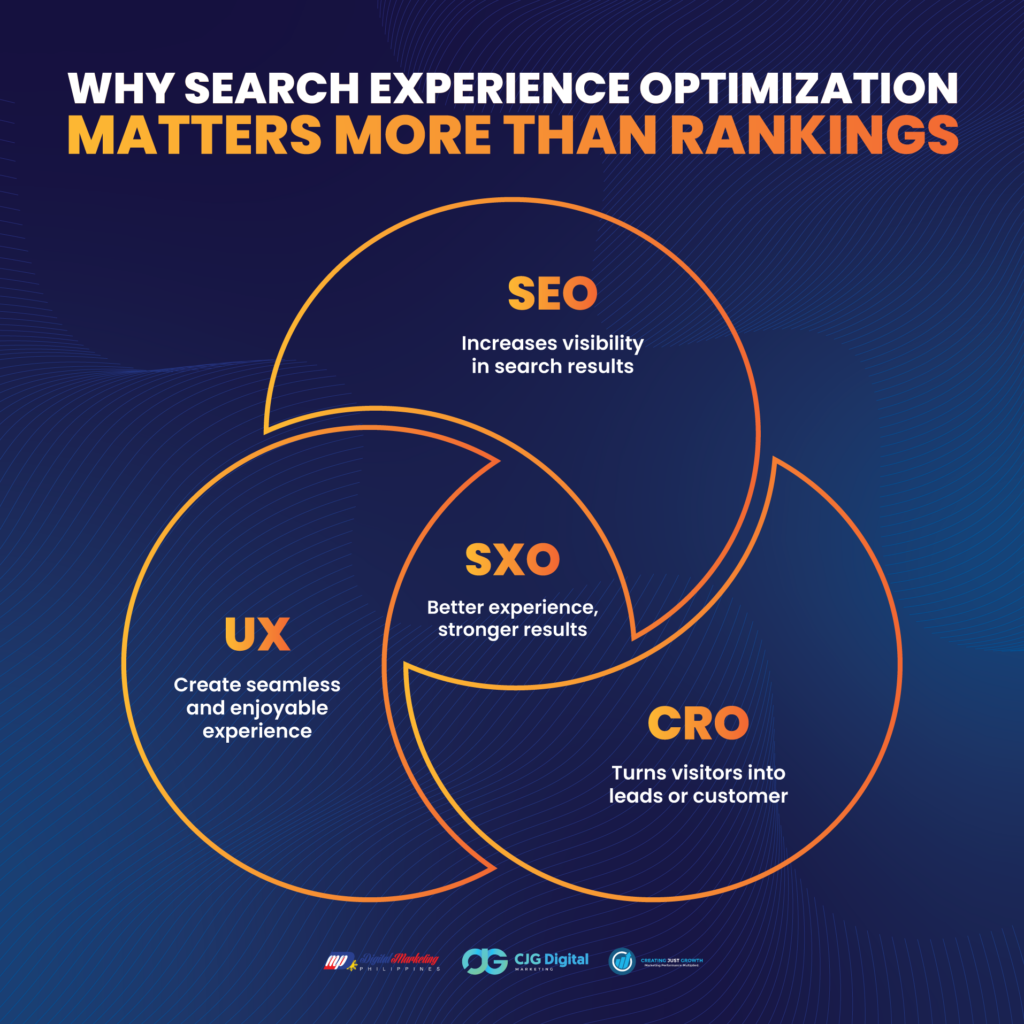
Search experience optimization (SXO) focuses on improving how people interact with a website after coming from search results. It combines search engine optimization (SEO), user experience (UX), and conversion rate optimization (CRO) to create pages that are easy to navigate, useful, engaging, and aligned with user intent, while also guiding visitors toward actions like inquiries, sign-ups, or purchases.
At the center: SXO – Better experience, stronger results
Image to follow:
Strategies That Strengthen SXO
- Improve page speed, mobile usability, and accessibility to make browsing easier for visitors.
- Structure content clearly using headings, concise explanations, visual hierarchy, and easy-to-scan layouts.
- Match page structure with user intent. Product comparisons, technical guides, and local service pages each require different content formats and user journeys.
- Reduce distractions such as intrusive popups, cluttered layouts, and repetitive blocks of text that interrupt engagement.
- Drive conversions using clear calls-to-action and friction-free forms.
AI-generated summaries and modern search interfaces have also shifted user expectations. Many users now look for direct answers before exploring detailed information. Websites with organized, reader-friendly content tend to perform better across both traditional search engines and AI-powered search experiences.
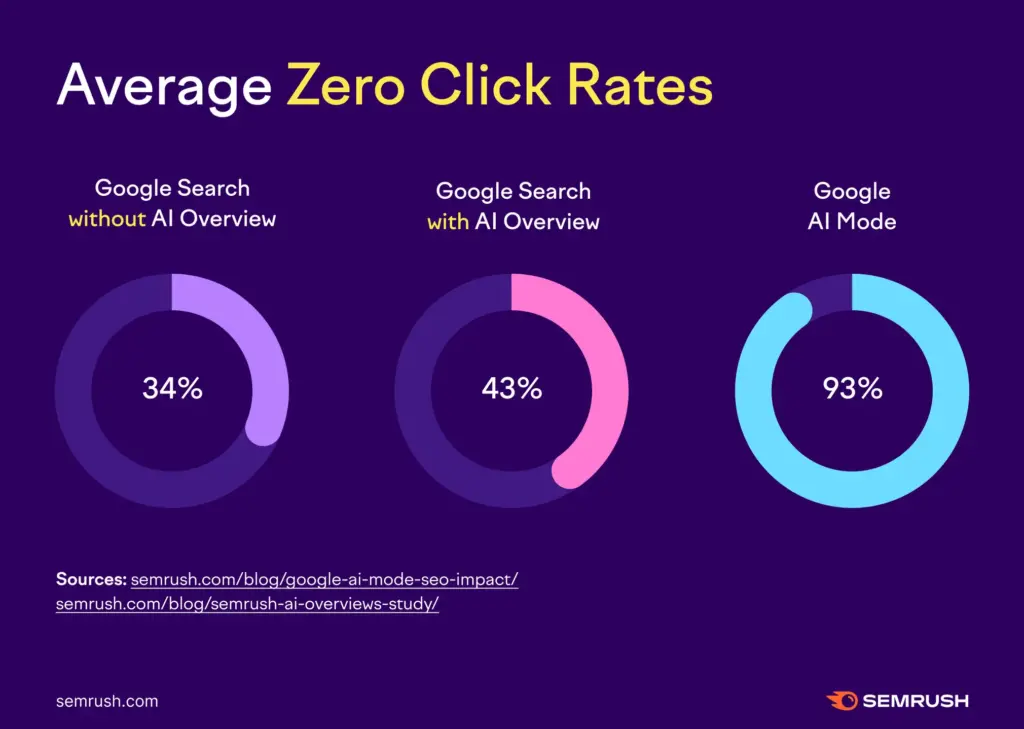
Image from Semrush
Search platforms increasingly favor websites that solve user needs efficiently and provide satisfying interactions after the click. That growing connection between SEO and UX is what keeps SXO an important part of modern digital visibility.
Search Everywhere Optimization Expands Visibility Beyond Google
Search behavior no longer starts and ends with traditional search engines. People now look for information across TikTok, YouTube, Reddit, Amazon, LinkedIn, Instagram, AI chat tools, app stores, voice assistants, and map platforms, depending on what they need. That shift has changed how businesses build visibility online.
Search everywhere optimization focuses on improving discoverability across multiple digital platforms instead of relying only on Google rankings. It looks at how people search in different environments and how brands can stay visible throughout the wider digital ecosystem.
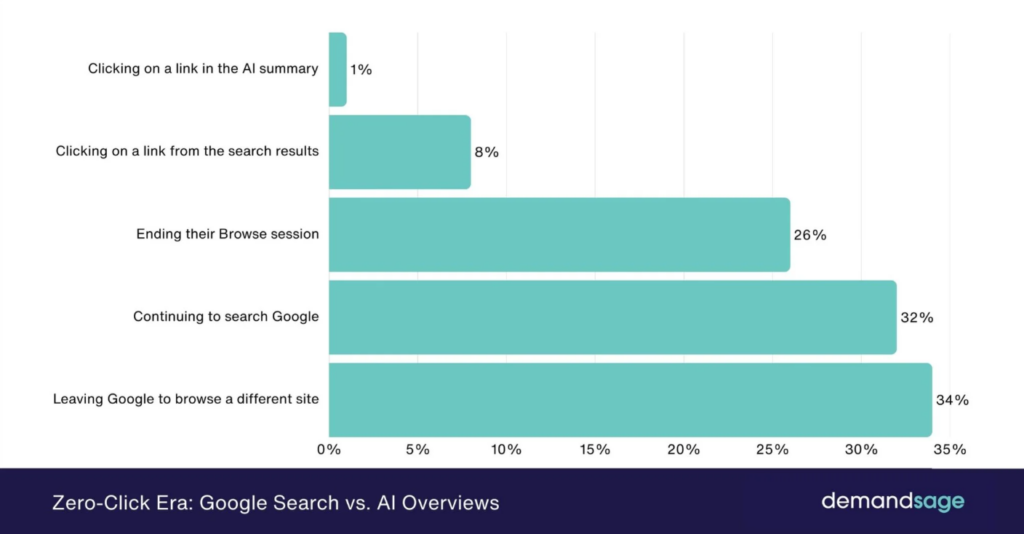
Image from Demandsage
Strategies That Strengthen Search Everywhere Optimization
- Create platform-specific content for environments such as TikTok, YouTube, Reddit, LinkedIn, Instagram, and AI-driven search interfaces.
- Maintain consistent branding, messaging, business information, and expertise signals across all digital channels.
- Optimize content formats based on platform behavior, including short-form videos, product reviews, tutorials, community discussions, and local listings.
Image from SparkToro
Different platforms now influence purchasing decisions, trust, and brand discovery at various stages of the customer journey. A YouTube review may shape a buying decision before someone visits a website. Reddit discussions can influence brand perception and credibility. TikTok tutorials may introduce products to entirely new audiences, whereas AI tools may summarize information pulled from multiple sources. Those interactions contribute to visibility even when users never visit a traditional search engine.
Moreover, search behavior also varies across demographics and user intent. Around 41% of Gen Z search directly on social platforms for recommendations, tutorials, and reviews, while professionals may rely more on LinkedIn or industry communities. Local searches increasingly depend on map listing and review platforms.
Modern optimization now depends on building connected content ecosystems rather than focusing only on individual webpages or traditional search rankings.
Where the Three “E’s” of Search Intersect
Strong digital strategies connect all three “E’s” of search instead of treating them as separate areas. These three areas intersect in several important ways:
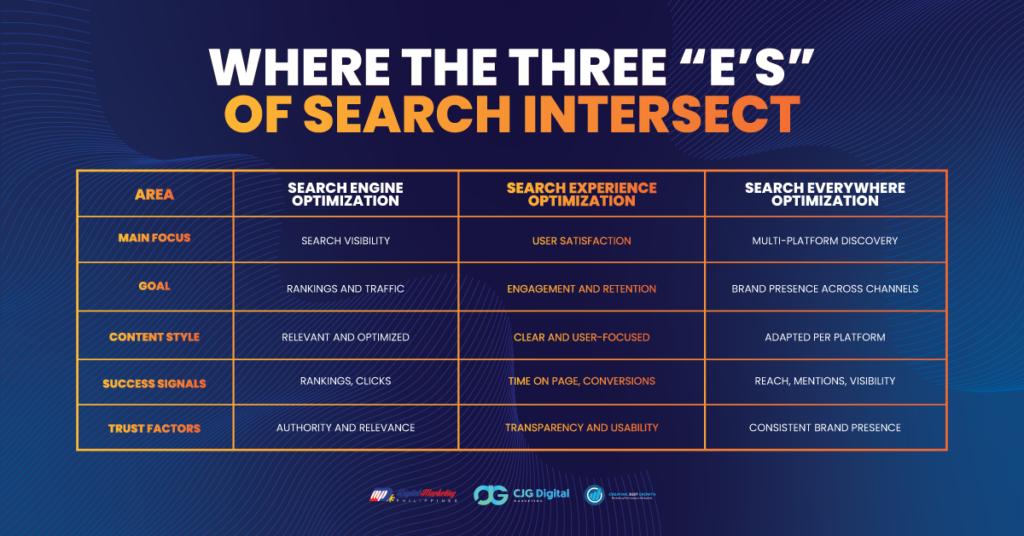
The connection between these three areas becomes stronger when businesses create content that ranks well, satisfies user intent, and remains discoverable across multiple platforms at the same time.
For example, a well-structured article may rank on Google, appear in AI-generated summaries, gain traction through LinkedIn shares, and support related YouTube explainer content. Each platform strengthens overall visibility and authority.
This kind of connected approach builds stronger digital resilience. Traffic sources become more diversified, which reduces dependence on a single platform or algorithm update.
Get Found Everywhere Your Audience Searches With DMP
Search behavior continues to shift across AI platforms, search engines, social media channels, and digital communities. Businesses that rely on outdated optimization methods often struggle to maintain visibility and audience engagement in modern search environments. Strong digital visibility now depends on a broader strategy that combines the three “E’s” of search with technical performance, user experience, authoritative content, and multi-platform discoverability.
Digital Marketing Philippines (DMP) helps brands strengthen visibility across modern search environments through strategic SEO, high-quality content, technical optimization, and platform-focused marketing strategies. Our team develops adaptable solutions aligned with the three “E’s” of search to support long-term growth, stronger audience trust, and wider digital reach across multiple channels.
Contact us today and discover how DMP can help businesses stay visible, competitive, and connected with audiences across the modern search landscape.
References:
https://moz.com/blog/search-experience-optimization-and-seo
https://www.forbes.com/advisor/business/ai-statistics
https://ahrefs.com/blog/search-experience-optimization
https://sparktoro.com/blog/its-still-seo-search-everywhere-optimization/
https://blog.hubspot.com/marketing/seo-ai-trends

Jomer B. Gregorio is a well-rounded expert when it comes digital marketing. Jomer is also known as a semantic SEO evangelist and practitioner. Check out our Digital Marketing Services today and let us help you in achieving positive and profitable results for your business.